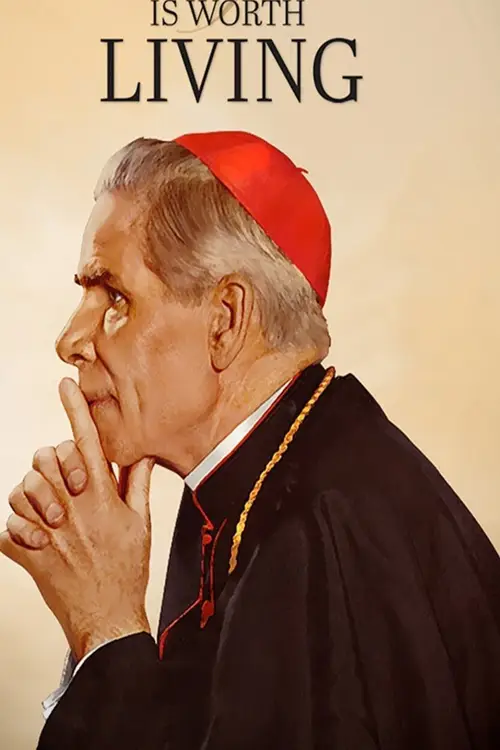
LIFE IS WORTH LIVING

Life Is Worth Living poster

Life Is Worth Living

Year: 1952 First Air: 1952-01-01
Overview

Life Is Worth Living is a pioneering television series featuring Archbishop Fulton J. Sheen delivering thoughtful talks on faith, ethics, and contemporary life, often using a chalkboard to illustrate his points

Synopsis

Hosted by Archbishop Fulton J. Sheen, Life Is Worth Living presents televised lectures that blend theology, philosophy, and everyday moral questions. Episodes typically unfold as a direct address to the audience, with Sheen building arguments step by step and punctuating them with humor and memorable aphorisms. The set is spare and intimate, emphasizing his voice, gestures, and chalkboard diagrams rather than dramatization. Topics range from personal character and family life to social responsibility and spiritual practice, framed for mid century American viewers. The program became a landmark of early TV for its ability to draw broad audiences to a non fiction, sermon like format

Cast
Trivia
Think early television, when a single speaker could captivate a national audience. Focus on the show’s on-camera style and what kind of program it was, not storylines.
Q1: What kind of on-screen format best describes Life Is Worth Living?
Answer: A single-host lecture/talk program
The show is often cited as proof that early TV audiences would tune in for pure spoken-word programming.
Q2: Which visual prop became strongly associated with Fulton J. Sheen’s presentations on the series?
Answer: A chalkboard
That simple prop helped make abstract ideas feel structured and TV-friendly in an era of minimal sets.
Q3: Life Is Worth Living is best categorized as which genre of television programming?
Answer: Religious/inspirational talk
Its popularity marked a notable moment for faith-based content crossing into mainstream television culture.