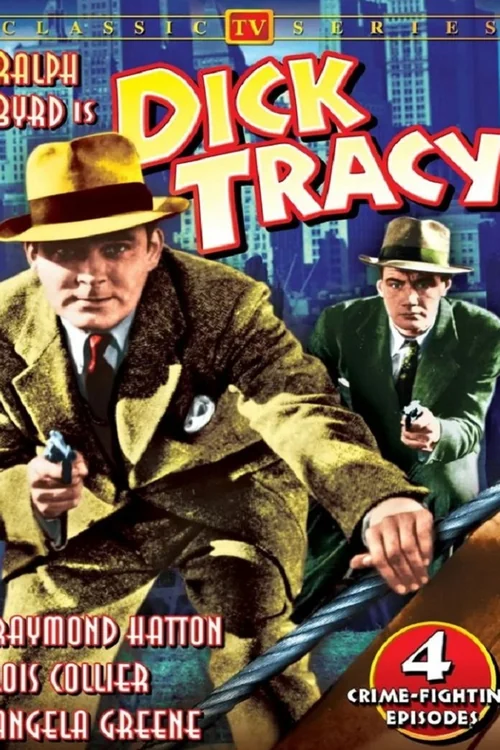
Dick Tracy
Dick Tracy is a 1950 crime television series that brings the hard-edged world of the famous detective comic strip to early TV. Following a no-nonsense police investigator with sharp instincts and a strong sense of justice, the show centers on tracking down dangerous criminals, solving tightly wound cases, and protecting the city from organized schemes and street-level threats.
Set in a stylized, crime-ridden urban landscape, Dick Tracy follows a determined police detective known for his quick thinking, relentless work ethic, and uncompromising approach to the law. Each episode presents a fresh case, from robberies and extortion plots to kidnappings and larger criminal rackets, as Tracy pieces together clues, questions suspects, and anticipates the next move of elusive wrongdoers. The series emphasizes procedural problem-solving and the moral certainty of its hero, balancing fast-moving investigations with confrontations that test patience and judgment. Along the way, Tracy relies on observation, careful deduction, and coordinated police work to stay one step ahead of criminals who use disguises, false leads, and intimidation. With brisk pacing and straightforward stakes, the show delivers classic crime storytelling focused on justice, accountability, and the constant push to keep the streets safe.