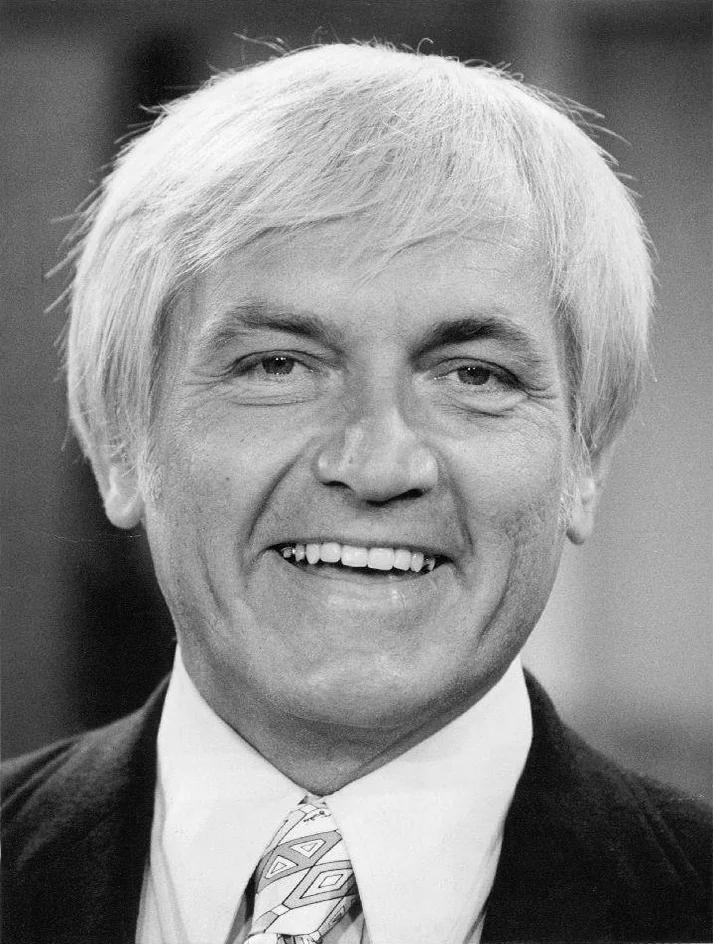
Photo: CBS Television. Ted Knight in a 1972 CBS publicity photograph. Commons crop and correction; converted to WebP and cropped for the share image. Published in the United States without copyright notice. Public domain (US). Portrait resized and converted; share image cropped with text added. See the source and license details below. Image credits
Intro
Ted Knight made comic self-importance memorable as television anchorman Ted Baxter, country-club judge Elihu Smails and family man Henry Rush. The Mary Tyler Moore Show is the best starting point: his polished broadcaster's voice promises authority while the character's behavior repeatedly undermines it. Knight's work rewards attention to the space between those two things. He could give an apparently confident statement a fragile edge, allowing another character's ordinary reply to become the scene's turning point. Those are useful qualities to watch across his better-known roles.
Career snapshot
Knight came from Terryville, Connecticut, and studied acting in Hartford after military service during World War II. His early professional experience included puppetry, ventriloquism and local broadcasting. The Hollywood Walk of Fame biography places him at Providence's WJAR from 1950 to 1955, then at WROW television and radio in Albany before he moved toward Hollywood in 1957. That background matters when considering his later screen identity: a broadcaster's practiced delivery and a children's entertainer's responsiveness were both parts of his working life before the famous sitcom role.
The entry point
Mary Tyler Moore recalled that the creators' initial idea of Ted Baxter differed from the character Knight brought into his audition. Jim Brooks and Allan Burns had imagined a handsome anchorman who might become a romantic interest for Mary. Knight's performance persuaded them to change direction. Her account makes the casting a useful example of an actor helping define a part. In the finished series, Mary Richards works at Minneapolis station WJM-TV, where Baxter's vanity unsettles the newsroom. The comedy depends on the ensemble responding to him, not simply on an isolated funny voice.
Screen identity and style
Caddyshack gave Knight a larger arena for offended dignity in 1980. His judge presides over Bushwood's social hierarchy while Rodney Dangerfield's Al Czervik challenges its conventions. Harold Ramis directed the film, which also features Chevy Chase, Bill Murray and Michael O'Keefe. AFI notes an unusual credit detail: the screen credits spell the judge's surname Smalls, while the spoken name and a surviving script support Smails. On a rewatch, compare the judge's formal manner with the disruption around him. His insistence on control provides the resistance that lets the other comic styles collide.
Collaborations and patterns
The newsroom cast paired Knight with Mary Tyler Moore, Ed Asner as Lou Grant and Gavin MacLeod as Murray Slaughter; Betty White later joined the workplace as Sue Ann Nivens. The Television Academy's tribute to Moore describes an ensemble built around Mary Richards. Watch how a glance, a pause or a change of subject from a colleague can reshape Baxter's performance. In Too Close for Comfort, beginning in 1980, Knight played Henry Rush. Moving from workplace colleague to a family sitcom's central figure offers a different way to examine his timing and reactions.
Era reflection
Knight's sustained place in 1970s television is documented by six Emmy nominations for The Mary Tyler Moore Show from 1972 through 1977. He won supporting-comedy acting awards in 1973 and 1976. Those dates help distinguish an established run of recognition from the retrospective familiarity of a character seen in reruns. Another surviving piece of that history is tangible: the Smithsonian's National Museum of American History holds a blue blazer worn by Knight as Ted Baxter. Costume and delivery together helped establish the character before a joke had even finished.
Legacy and rediscovery
For a compact viewing path, start with the newsroom ensemble, then compare Caddyshack's country-club conflict and Henry Rush's family setting. Notice when Knight has the joke and when his character becomes the person another performer plays against. The Hollywood Walk of Fame honored him in its television category on January 30, 1985. His lasting screen identity rests on both the recognizable voice and the work surrounding it: casting, costumes, scene partners and the rhythm of recurring characters. The local gallery presents selected productions as selected milestones, not an exhaustive filmography.
A career in pictures
Selected career milestones. Years identify the production or labeled milestone; recurring actors may join a series later. Artwork represents the production and may show other cast members. Select an image for a larger view.
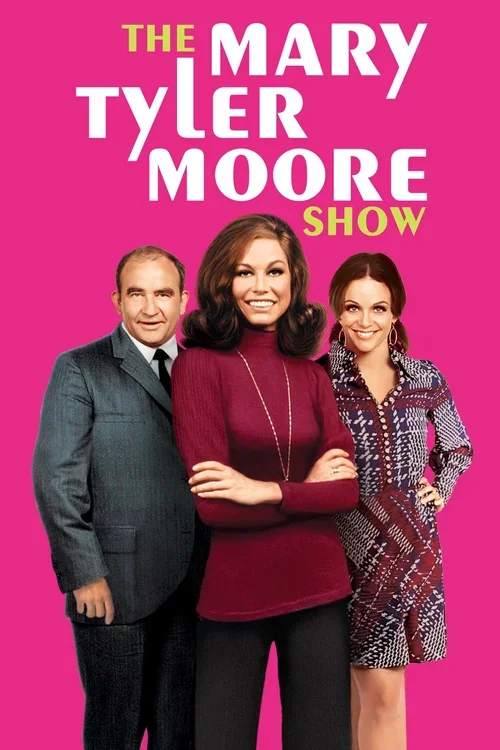
The Mary Tyler Moore Show
Ted Baxter. Newsroom ensemble comedy; the series ran from 1970 to 1977.
Production artwork from the DailyTimeCapsule archive. Image credits
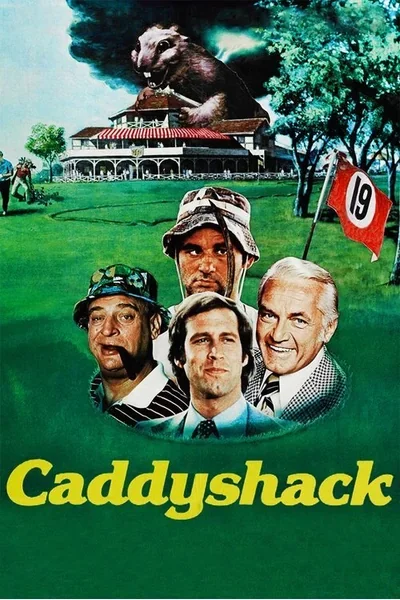
Caddyshack
Judge Elihu Smails. Harold Ramis's country-club comedy.
Production artwork from the DailyTimeCapsule archive. Image credits
Rewatch notes
- Knight won supporting-comedy Emmys in 1973 and 1976 for The Mary Tyler Moore Show.
- The Smithsonian holds a blue blazer he wore as Ted Baxter.
- AFI documents the Smalls/Smails spelling difference in Caddyshack.
Career highlights
Newsroom ensemble comedy; the series ran from 1970 to 1977.
Harold Ramis's country-club comedy.
A later starring television role.
Sources and image credits
Portrait: CBS Television
https://commons.wikimedia.org/wiki/File:Ted_Knight_1972.JPG
License: Public domain (US) https://commons.wikimedia.org/wiki/Template:PD-US-no_notice
- The Mary Tyler Moore Show — Production artwork from the DailyTimeCapsule archive.
https://www.televisionacademy.com/features/news/hall-fame/mary-tyler-moore-hall-fame-tribute - Caddyshack — Production artwork from the DailyTimeCapsule archive.
https://catalog.afi.com/Catalog/moviedetails/67021
Reviewed September 25, 2026. Source references and image credits are listed below. This is a selected profile, not a complete credit list.
- Television Academy: Ted Knight awards record
https://www.televisionacademy.com/bios/ted-knight - Hollywood Walk of Fame: Ted Knight
https://walkoffame.com/ted-knight/ - AFI Catalog: Caddyshack
https://catalog.afi.com/Catalog/moviedetails/67021 - Television Academy: Mary Tyler Moore oral history excerpt
https://www.televisionacademy.com/features/emmy-magazine/articles/foundation-archive-mary-tyler-moore - Television Academy: Mary Tyler Moore Hall of Fame tribute
https://www.televisionacademy.com/features/news/hall-fame/mary-tyler-moore-hall-fame-tribute - Smithsonian: Ted Baxter's blue blazer
https://americanhistory.si.edu/collections/object/nmah_679345 - TVmaze: Henry Rush episode credits
https://www.tvmaze.com/characters/194823/too-close-for-comfort-henry-rush - Wikimedia Commons: CBS portrait and licensing
https://commons.wikimedia.org/wiki/File:Ted_Knight_1972.JPG
Production artwork is reused from the DailyTimeCapsule archive. The imagery represents the production and may not depict this actor or their particular season. Portrait and share-photo attribution appears beneath the portrait.
Corrections: hello@dailytimecapsule.com