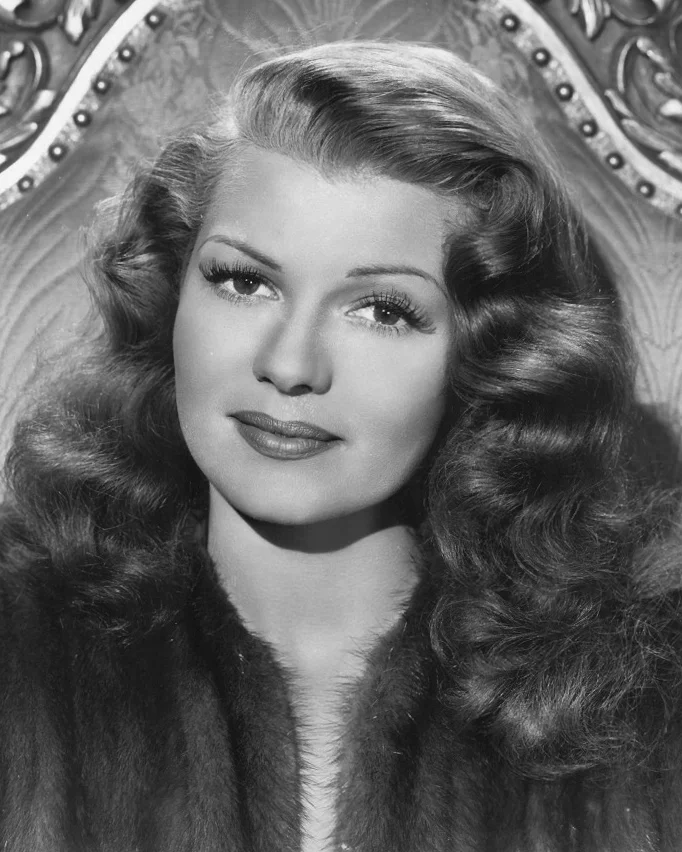
Down to Earth publicity portrait (1947)
Rita Hayworth
Columbia Pictures portrait photographed by Ned Scott, identified with Down to Earth.
Entry point: Gilda (1946).
Explore the career in pictures
Updated
Rita Hayworth was an American actress and dancer whose best-known films include Gilda, Cover Girl and the two musicals she made with Fred Astaire. Born Margarita Carmen Cansino in Brooklyn in 1918, she developed a screen career that moved between dance, romantic comedy and dramatic roles. Her name became closely associated with Columbia Pictures, but the films reward attention beyond the familiar publicity image. A musical partnership, an ambiguous noir character and a troubled figure in an ensemble drama each reveal a different aspect of her work.
Hayworth came from a performing family and danced professionally before becoming a major film star. TCM's career account traces her early studio work at Fox, subsequent freelance assignments and move to Columbia. Only Angels Have Wings, directed by Howard Hawks in 1939, became an important step in that progression. She played Judy MacPherson within an ensemble led by Cary Grant and Jean Arthur. The role placed her in a dramatic story about pilots and personal history, rather than simply using her as a decorative presence or a dancer passing through a musical number.
The early 1940s brought several contrasting opportunities. The Strawberry Blonde cast her as Virginia Brush, while Blood and Sand gave her Doña Sol. Alongside those films came You'll Never Get Rich in 1941 and You Were Never Lovelier in 1942, both with Astaire. Those musical collaborations make her dance training especially visible. Watching the partners share a frame directs attention to timing, balance and coordinated movement, qualities that a still portrait cannot preserve. They are therefore an essential part of understanding her success, even for viewers who first encounter her through Gilda.
Cover Girl, directed by Charles Vidor in 1944, paired Hayworth with Gene Kelly and featured Phil Silvers. She played Rusty Parker and, in the film's historical passages, Rusty's grandmother Maribelle. The gallery includes a publicity still showing the three performers together, a different kind of career evidence from the individual portrait. The musical's story connects ambition with the costs of becoming publicly desirable, giving the star a narrative about fame as well as an opportunity to dance. Its colour spectacle also offers a clear visual contrast with the darker films that followed.
Gilda reunited Hayworth with Vidor and Glenn Ford in 1946. Her title character's relationship with Ford's Johnny Farrell supplied a story built around attraction, resentment and uncertain motives. The famous glove number remains one of her most recognisable screen moments, but it belongs within that larger dramatic situation. TCM also notes the collaborative work of costume designer Jean Louis and writer-producer Virginia Van Upp around her career. Remembering those contributors helps explain how a star image was created through acting, writing, wardrobe and staging together, rather than by the performer alone.
The Lady from Shanghai gave Hayworth another noir role, Elsa Bannister, under Orson Welles's direction. Later work included Miss Sadie Thompson, Pal Joey and Separate Tables, followed by Circus World with John Wayne. The Golden Globes records a 1965 dramatic-actress nomination for Circus World, an indication that the career extended well beyond its most frequently reproduced 1940s images. These later titles provide useful starting points for viewers interested in the changing opportunities available to an established star, from musical glamour to more mature dramatic parts and ensemble work.
Hayworth died in 1987. A balanced return to her films can begin with a dance musical, continue through Gilda and then include one of the later dramas. Such a route keeps the performer in motion and in relation to other actors, instead of allowing a single publicity pose to stand for the whole career. The portrait shown here is identified in its source record with Down to Earth in 1947; the other image belongs to Cover Girl in 1944. Their separate production contexts are retained in the captions and acknowledgments below.
A 1947 publicity portrait and a distinct 1944 Cover Girl ensemble still.
Rita Hayworth
Columbia Pictures portrait photographed by Ned Scott, identified with Down to Earth.
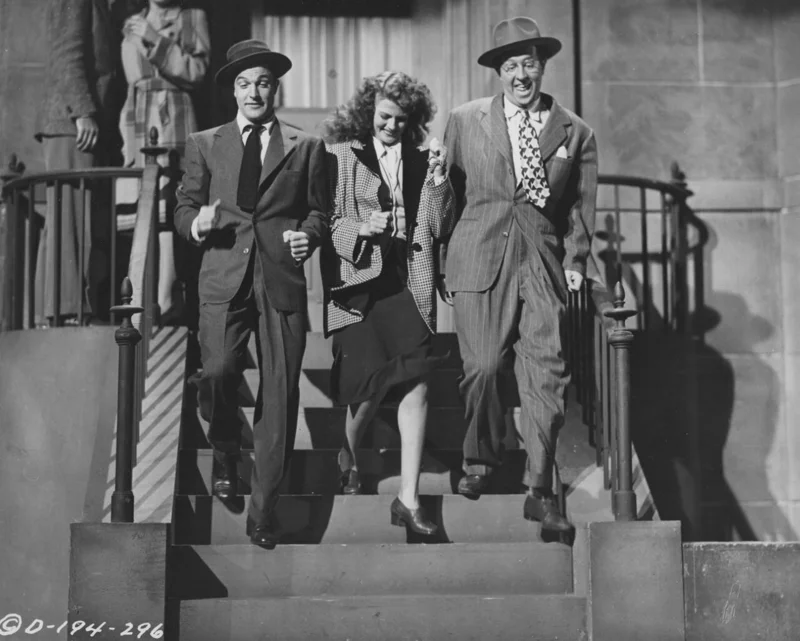
Rusty Parker
Gene Kelly, Rita Hayworth and Phil Silvers in a Columbia Pictures publicity still.
BFI career and film guide
https://www.bfi.org.uk/lists/rita-hayworth-10-essential-films
TCM career retrospective
https://www.tcm.com/articles/60186/summer-under-the-stars-rita-hayworth
Golden Globes biography and nomination record
https://goldenglobes.com/person/rita-hayworth/
Commons: portrait provenance and license
https://commons.wikimedia.org/wiki/File:Rita%20Hayworth-publicity.JPG
Corrections: hello@dailytimecapsule.com
Work: Rita Hayworth-publicity.JPG
Creator: Columbia Pictures , photograph by Ned Scott
Date: 1947
Original source: https://commons.wikimedia.org/wiki/File:Rita%20Hayworth-publicity.JPG
Primary archive: https://commons.wikimedia.org/wiki/File:Rita%20Hayworth-publicity.JPG
License: Public domain
License URI: https://commons.wikimedia.org/wiki/File:Rita_Hayworth-publicity.JPG
Changes: Resized and converted to WebP; portrait also placed in a titled share image. No endorsement implied.
Rights scope: No endorsement implied. See the stated license and modification notice.
Work: Gene Kelly, Rita Hayworth & Phil Silvers Cover Girl 1944.jpg
Creator: Unknown author , distributed by: Columbia Pictures
Date: 1944
Original source: https://commons.wikimedia.org/wiki/File:Gene%20Kelly%2C%20Rita%20Hayworth%20%26%20Phil%20Silvers%20Cover%20Girl%201944.jpg
Primary archive: https://commons.wikimedia.org/wiki/File:Gene%20Kelly%2C%20Rita%20Hayworth%20%26%20Phil%20Silvers%20Cover%20Girl%201944.jpg
License: Public domain
License URI: https://commons.wikimedia.org/wiki/File:Gene_Kelly%2C_Rita_Hayworth_%26_Phil_Silvers_Cover_Girl_1944.jpg
Changes: Resized and converted to WebP; portrait also placed in a titled share image. No endorsement implied.
Rights scope: No endorsement implied. See the stated license and modification notice.