
Photo: bekahjan. At The Waltons fortieth-anniversary gathering, September 29, 2012. Portrait resized and converted; share image cropped with text added. CC BY 2.0. Portrait resized and converted; share image cropped with text added. See the source and license details below. Image credits
Intro
Ralph Waite brought a recognizable steadiness to John Walton in The Waltons, but his screen career also included difficult men, smaller film roles and late-life guest appearances. Born in White Plains, New York, in 1928, he reached professional acting after several other occupations. That route makes his biography unusual among familiar television leads. The father at the centre of a weekly family drama was a performer who had already lived through military service, higher education, ministry and publishing before establishing himself on stage and screen.
Career snapshot
The United States Navy Memorial records Waite's Marine Corps service from 1946 to 1948, followed by study at Bucknell University. He later earned a master's degree at Yale Divinity School, became a minister and worked as a religious editor at Harper & Row. These are documented stages of his early life, rather than explanations imposed on any one performance. The Television Academy places his serious move into acting in his thirties and notes work on Broadway and at New York's Public Theater. Film and television followed that theatrical beginning.
The entry point
The Waltons, which began as a regular series in 1972, turned Waite into a familiar presence in American homes. Earl Hamner Jr.'s drama followed a rural Virginia family through the Depression and wartime years. Waite's John and Michael Learned's Olivia were the parents; Richard Thomas played their aspiring-writer son John-Boy. The large ensemble mattered as much as the household's central couple. For a rewatch, notice how a family discussion distributes attention among generations, and how John's response changes when he is addressing a child, his wife or the older members of the household.
Screen identity and style
A restrained television performance does not have to be passive. John Walton can listen, object and make a decision without turning every scene into a speech. The role provides a useful study in how a continuing character acquires authority through repeated encounters. Waite's work in Roots supplies a sharply different point of comparison: he played a slave ship's first mate. The Television Academy's award entries record nominations for Roots in 1977 and The Waltons in 1978. These are nominations, not wins, and they recognize performances with very different moral positions.
Collaborations and patterns
Before The Waltons, Waite appeared as Alibi in Cool Hand Luke. AFI's cast record places him among the prison drama's extensive supporting ensemble, alongside lead performers Paul Newman and George Kennedy, under Stuart Rosenberg's direction. The film gives viewers a way to look for him outside the reassuring associations of his later television role. Hallmark's biography also identifies Five Easy Pieces, with Jack Nicholson, among his early films. The gallery uses production artwork to identify these career settings; it does not imply that a poster's principal figure is Waite.
Era reflection
Waite continued working into his eighties. Hallmark records later appearances in programmes including Bones, Grey's Anatomy and Days of Our Lives, alongside his recurring NCIS role. On NCIS he was Jackson Gibbs, father of the investigator played by Mark Harmon. CBS's release for the 2014 episode Honor Thy Father explicitly describes a tribute to Waite after six seasons of recurring appearances. The story sends Gibbs home after his father's death. That production record distinguishes an episode honoring the actor from a new performance filmed after his death.
Legacy and rediscovery
Waite died on February 13, 2014. His career can be approached through three distinct kinds of ensemble: the prisoners of Cool Hand Luke, the extended household of The Waltons and the family history explored in NCIS. Moving among them helps separate the actor from the single paternal image that made him most familiar. His later credits also show that a long-running signature role need not end a working career. The continued television appearances gave newer audiences their own point of recognition, while the earlier performances remained available for rediscovery.
A career in pictures
Selected career milestones. Years identify the production or labeled milestone; recurring actors may join a series later. Artwork represents the production and may show other cast members. Select an image for a larger view.

Cool Hand Luke
Alibi. Part of the supporting ensemble in Stuart Rosenberg's prison drama.
Production artwork from the DailyTimeCapsule archive. Image credits
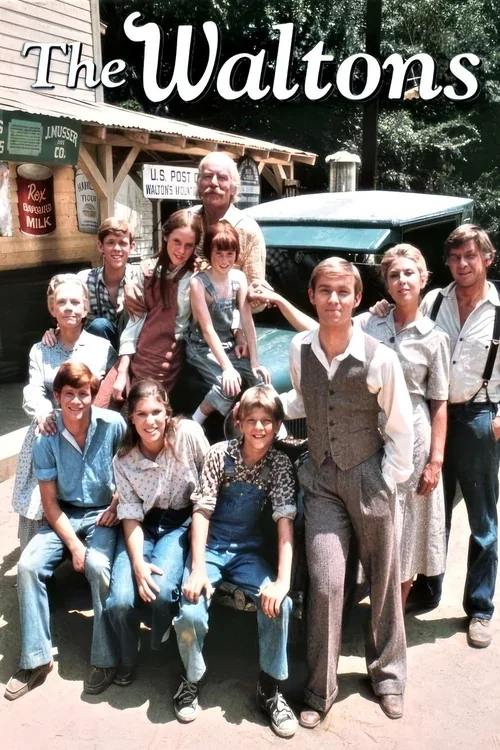
The Waltons
John Walton. The series' family patriarch, opposite Michael Learned as Olivia.
Production artwork from the DailyTimeCapsule archive. Image credits

Roots
Slave ship first mate. An Emmy-nominated supporting performance in the original miniseries.
Production artwork from the DailyTimeCapsule archive. Image credits

NCIS
Jackson Gibbs; recurring-role milestone. Series began in 2003; Waite's recurring appearances began later.
Production artwork from the DailyTimeCapsule archive. Image credits
Rewatch notes
- AFI identifies Waite's Cool Hand Luke character as Alibi.
- His Emmy nomination entries are for Roots in 1977 and The Waltons in 1978.
- The NCIS episode Honor Thy Father was presented as a tribute after his death.
Career highlights
Part of the supporting ensemble in Stuart Rosenberg's prison drama.
The series' family patriarch, opposite Michael Learned as Olivia.
An Emmy-nominated supporting performance in the original miniseries.
Series began in 2003; Waite's recurring appearances began later.
Sources and image credits
Portrait: bekahjan
https://commons.wikimedia.org/wiki/File:Ralph_Waite.jpg
License: CC BY 2.0 https://creativecommons.org/licenses/by/2.0/
- Cool Hand Luke — Production artwork from the DailyTimeCapsule archive.
https://catalog.afi.com/Catalog/MovieDetails/22697 - The Waltons — Production artwork from the DailyTimeCapsule archive.
https://www.hallmarkfamily.com/the-waltons/cast/ralph-waite - Roots — Production artwork from the DailyTimeCapsule archive.
https://www.televisionacademy.com/bios/ralph-waite - NCIS — Production artwork from the DailyTimeCapsule archive.
https://navylog.navymemorial.org/waite-ralph-0
Reviewed September 26, 2026. Source references and image credits are listed below. This is a selected profile, not a complete credit list.
- Television Academy: Ralph Waite biography and nomination record
https://www.televisionacademy.com/bios/ralph-waite - Hallmark Family: Ralph Waite as John Walton
https://www.hallmarkfamily.com/the-waltons/cast/ralph-waite - AFI Catalog: Cool Hand Luke cast and production record
https://catalog.afi.com/Catalog/MovieDetails/22697 - CBS/Paramount Press Express: Honor Thy Father tribute, 2014
https://www.paramountpressexpress.com/cbs-entertainment/shows/ncis/releases?episode=17579 - United States Navy Memorial: Ralph H. Waite service biography
https://navylog.navymemorial.org/waite-ralph-0 - Television Academy: Earl Hamner Jr. and The Waltons ensemble
https://www.televisionacademy.com/bios/earl-hamner-jr - Wikimedia Commons: bekahjan portrait and license
https://commons.wikimedia.org/wiki/File:Ralph_Waite.jpg
Production artwork is reused from the DailyTimeCapsule archive. The imagery represents the production and may not depict this actor or their particular season. Portrait and share-photo attribution appears beneath the portrait.
Corrections: hello@dailytimecapsule.com