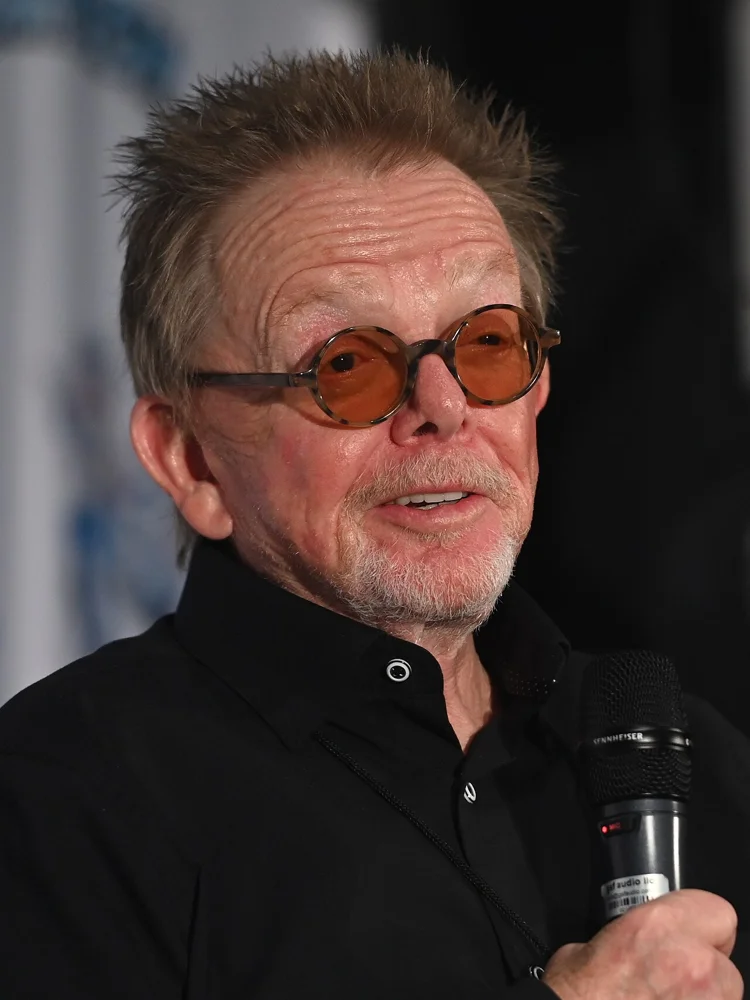
GalaxyCon Raleigh portrait (2022)
Paul Williams at GalaxyCon Raleigh
Super Festivals photograph dated July 29, 2022.
Entry point: Smokey and the Bandit (1977).
Explore the career in pictures
Updated
Paul Williams is a songwriter, singer and actor whose work crosses the boundary between music made for the screen and performances within it. His screen appearances include Phantom of the Paradise, Smokey and the Bandit and Battle for the Planet of the Apes. His writing connects him with the Muppets and with songs recorded by a wide range of performers. These are related strands of a career, but they are distinct credits: writing a character's song and playing a character on camera involve different contributions.
Williams told the Library of Congress that he began as an actor before developing his songwriting career. As a contract writer at A&M, he worked with Roger Nichols, writing lyrics to Nichols's music as a regular daily practice. That account gives a practical foundation to a career often remembered through famous titles. Songwriting involved sustained collaboration and repeated work, rather than only isolated moments of inspiration. His acting background also influenced the way he approached songs intended to express another character's feelings.
Smokey and the Bandit offers a familiar acting entry point through Little Enos. Williams returned to that character in the film series, while his wider screen record includes work in television comedy, adventure and animation. The official filmography lists The Odd Couple, The Love Boat, Batman: The Animated Series and later Goliath. These credits should not be confused with his music catalogue, even where the two histories overlap. They show an actor continuing to perform alongside a substantial separate career as a writer and recording artist.
His collaboration with Jim Henson developed after an appearance on The Muppet Show. Williams recalled being invited to write for Emmet Otter's Jug-Band Christmas before working on The Muppet Movie with Kenny Ascher. In that interview, he described songs as a way to move a story forward or reveal a character's inner life. The approach treats a song as part of dramatic characterization. Listening to a Muppet song in its scene, rather than only as a standalone recording, helps reveal what that writing contributes to the film.
Williams's official biography places Phantom of the Paradise, Bugsy Malone, The Muppet Christmas Carol and Ishtar among his song-score credits. The variety matters: the stories differ in tone, intended audience and the relationship between musical performance and plot. His later collaboration with Daft Punk on Random Access Memories brought his writing and singing into another setting. Rather than assuming every project has the same musical purpose, a listener can compare how his contributions fit the larger work and the collaborators involved in making it.
The two gallery photographs document Williams in public appearances associated with different sides of that career. Pat Padua photographed him at an ASCAP concert in 2011; Super Festivals photographed him at GalaxyCon Raleigh in 2022. The images are separate originals, not alternate crops offered as additional career moments. The concert setting connects with his work among music creators, while the convention setting reflects the audience for his screen appearances. Their captions identify the occasions without presenting them as production stills from his earlier films.
Williams's career can be explored through several complementary routes: an acting role, a screen song in its narrative context, and a later musical collaboration. His official biography also describes his advocacy for recovery and his writing with Tracey Jackson, extending his public work beyond entertainment credits. For a focused viewing programme, begin with Smokey and the Bandit, then compare a film to which he contributed music. The contrast preserves the individual roles of actor, lyricist, composer and singer while showing how those forms of storytelling can inform one another.
Separate concert and convention photographs show Williams as a public performer and music creator.
Paul Williams at GalaxyCon Raleigh
Super Festivals photograph dated July 29, 2022.
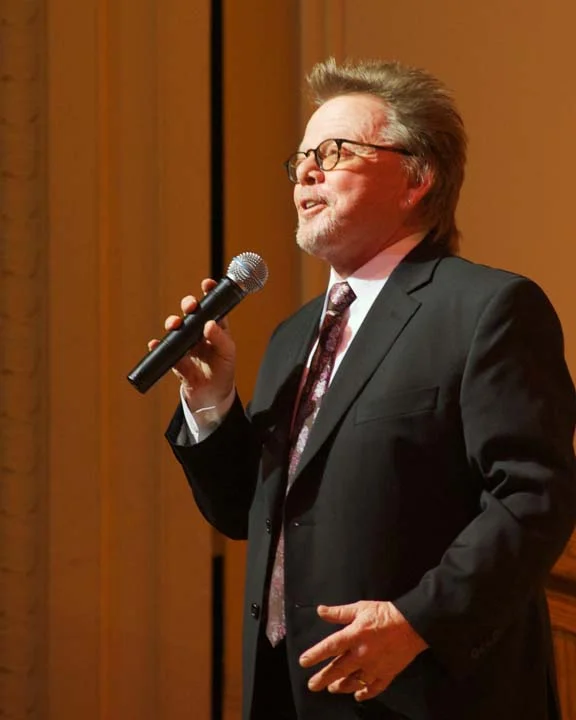
Paul Williams at an ASCAP concert
Pat Padua photograph dated May 10, 2011.
Paul Williams: official biography
https://www.paulwilliamsofficial.com/about-1/
Paul Williams: screen credits
https://www.paulwilliamsofficial.com/screen/
Library of Congress: Williams interview
https://www.loc.gov/static/programs/national-recording-preservation-board/documents/Interview_Paul-Williams.pdf
NAMM: Williams oral history
https://www.namm.org/library/oral-history/paul-williams
Commons: portrait provenance and license
https://commons.wikimedia.org/wiki/File:Paul%20Williams%20%2852261875963%29%20%28cropped%29.jpg
Corrections: hello@dailytimecapsule.com
Work: Paul Williams (52261875963) (cropped).jpg
Creator: Super Festivals from Ft. Lauderdale, USA
Date: 2022-07-29 12:27
Original source: https://commons.wikimedia.org/wiki/File:Paul%20Williams%20%2852261875963%29%20%28cropped%29.jpg
Primary archive: https://commons.wikimedia.org/wiki/File:Paul%20Williams%20%2852261875963%29%20%28cropped%29.jpg
License: CC BY 2.0
License URI: https://creativecommons.org/licenses/by/2.0
Changes: Resized and converted to WebP; portrait also placed in a titled share image. No endorsement implied.
Rights scope: No endorsement implied. See the stated license and modification notice.
Work: Paul Williams, ASCAP concert, 2011.jpg
Creator: Pat Padua
Date: 2011-05-10 20:50:58
Original source: https://commons.wikimedia.org/wiki/File:Paul%20Williams%2C%20ASCAP%20concert%2C%202011.jpg
Primary archive: https://commons.wikimedia.org/wiki/File:Paul%20Williams%2C%20ASCAP%20concert%2C%202011.jpg
License: CC BY 2.0
License URI: https://creativecommons.org/licenses/by/2.0
Changes: Resized and converted to WebP; portrait also placed in a titled share image. No endorsement implied.
Rights scope: No endorsement implied. See the stated license and modification notice.