
Photo: Arnold Gatilao / inuyaki.com. Omar Epps photographed on May 17, 2007. Existing crop resized; share image adapted. CC BY 2.0. Portrait resized and converted; share image cropped with text added. See the source and license details below. Image credits
Intro
Omar Epps is an American actor, producer and author whose career connects landmark early film roles with long-running television drama. Audiences encountered him as Q in Juice and Quincy in Love & Basketball before his years as Dr. Eric Foreman on House. Those characters inhabit very different worlds, yet each gives him relationships defined by ambition, loyalty and disagreement. His work as a writer adds another part of the story, extending beyond performing a character into creating narratives for readers.
Career snapshot
Juice, released in 1992, placed Epps in a four-person Harlem ensemble alongside Tupac Shakur, Khalil Kain and Jermaine Hopkins. Paramount identifies their characters as Q, Bishop, Raheem and Steel. Under Ernest Dickerson’s direction, the film follows friendship under mounting pressure. A useful rewatch begins with how the friends interact before their relationships harden into conflict. Epps’s Q is best understood within that group, rather than isolated from the performances around him. His publisher’s biography identifies the film as the introduction that brought him to audiences.
The entry point
On House, Epps played Dr. Eric Foreman, one of the physicians working in the orbit of Hugh Laurie’s Gregory House. The medical drama ran from 2004 to 2012. Foreman gives a viewer a way to watch the series’ arguments about judgment and professional authority: he is more than someone present to receive an explanation from the lead character. Notice how an objection is delivered, what happens when confidence meets uncertainty, and how a working relationship changes through repeated disagreements. These are observations to test against the episodes, not medical guidance.
Screen identity and style
Love & Basketball offers a different kind of sustained relationship. Gina Prince-Bythewood’s 2000 feature pairs Epps with Sanaa Lathan as Quincy and Monica, two people whose shared sport becomes bound up with desire and ambition. Film at Lincoln Center describes the story through four quarters, following their lives from childhood toward adulthood. That structure makes change especially visible: compare what competition means at different stages and how it alters their intimacy. The performances need to make both the closeness and the friction convincing for the relationship to hold the film together.
Collaborations and patterns
Criterion’s edition of Love & Basketball places Prince-Bythewood’s debut in context with material involving the filmmaker, Lathan, Epps and other collaborators. The film joins romance and sport without reducing either person to an obstacle in the other’s story. For a closer look at Epps, watch scenes with Lathan beside the family exchanges: a romantic partner and a son may show different kinds of assurance. Returning from this film to Juice also makes clear how strongly an actor’s work can change with a director, a partner and the structure of the story.
Era reflection
Epps’s storytelling also includes books. Penguin Random House lists the memoir From Fatherless to Fatherhood and the Nubia novels. Nubia: The Awakening, co-written with Clarence A. Haynes, was published in 2022 and follows young descendants of refugees in a future New York shaped by environmental and social upheaval. The writing credit is a distinct accomplishment rather than an acting role. It widens the profile from screen performance to the construction of an imagined world, while preserving Haynes’s co-authorship rather than presenting the novel as a solo project.
Legacy and rediscovery
Later television work includes Darnell in This Is Us and Detective Malcolm Howard in Power Book III: Raising Kanan. These roles extend a career already spanning youth drama, romance and a major medical series. A practical viewing path starts with Juice, continues through Love & Basketball and then turns to Foreman on House. The gallery adds Raising Kanan as a later milestone. Together, the selected credits show a performer whose work can support a central ensemble, carry a romantic partnership or sustain a recurring character over time; the books offer a separate route into his storytelling.
A career in pictures
Selected career milestones. Years identify the production or labeled milestone; recurring actors may join a series later. Artwork represents the production and may show other cast members. Select an image for a larger view.
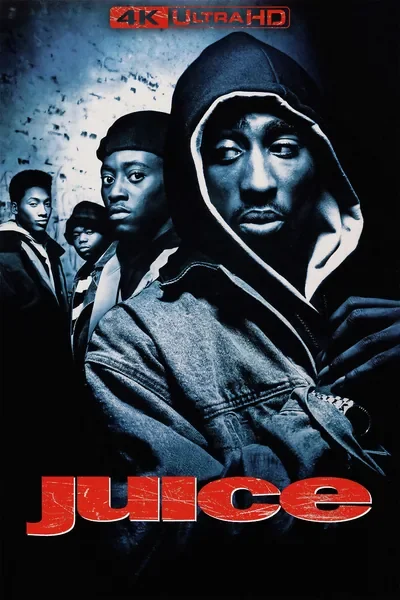
Juice
Q. Production artwork identifies the work and may depict other ensemble members.
Production artwork from the DailyTimeCapsule archive. Image credits

House
Dr. Eric Foreman. Production artwork identifies the work and may depict other ensemble members.
Production artwork from the DailyTimeCapsule archive. Image credits

Power Book III: Raising Kanan
Detective Malcolm Howard. Production artwork identifies the work and may depict other ensemble members.
Production artwork from the DailyTimeCapsule archive. Image credits
Rewatch notes
- Epps played Q opposite Tupac Shakur’s Bishop in Juice.
- He co-wrote Nubia: The Awakening with Clarence A. Haynes.
- His publisher identifies his This Is Us character as Darnell.
Career highlights
Production artwork identifies the work and may depict other ensemble members.
Production artwork identifies the work and may depict other ensemble members.
Production artwork identifies the work and may depict other ensemble members.
Sources and image credits
Portrait: Arnold Gatilao / inuyaki.com
https://commons.wikimedia.org/wiki/File:Omar_Epps_2.jpg
License: CC BY 2.0 https://creativecommons.org/licenses/by/2.0/
- Juice — Production artwork from the DailyTimeCapsule archive.
https://www.paramountpictures.com/movies/juice - House — Production artwork from the DailyTimeCapsule archive.
https://www.penguinrandomhouse.com/authors/2249023/omar-epps/ - Power Book III: Raising Kanan — Production artwork from the DailyTimeCapsule archive.
https://en.wikipedia.org/wiki/Omar_Epps
Reviewed September 29, 2026. Source references and image credits are listed below. This is a selected profile, not a complete credit list.
- Penguin Random House: Omar Epps biography
https://www.penguinrandomhouse.com/authors/2249023/omar-epps/ - Paramount Pictures: Juice
https://www.paramountpictures.com/movies/juice - Criterion Collection: Love & Basketball
https://www.criterion.com/films/31500-love-basketball - Film at Lincoln Center: Love & Basketball
https://www.filmlinc.org/films/love-basketball/ - Penguin Random House: Nubia The Awakening
https://www.penguinrandomhouse.com/books/677153/nubia-the-awakening-by-omar-epps-and-clarence-a-haynes/ - Omar Epps: referenced career overview
https://en.wikipedia.org/wiki/Omar_Epps - Commons: portrait source and license
https://commons.wikimedia.org/wiki/File:Omar_Epps_2.jpg
Production artwork is reused from the DailyTimeCapsule archive. The imagery represents the production and may not depict this actor or their particular season. Portrait and share-photo attribution appears beneath the portrait.
Corrections: hello@dailytimecapsule.com