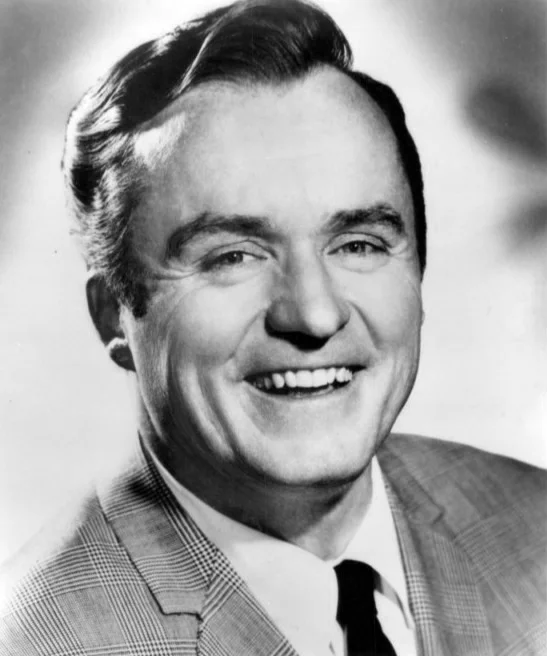
Photo: AFA / Ashley Famous Agency. Publicity portrait with an earliest date stamp of December 1966. Public domain in the United States. Portrait resized and converted; share image cropped with text added. See the source and license details below. Image credits
Intro
Mike Douglas was a singer, voice performer and television host whose name became closely associated with daytime conversation and musical variety. Born Michael Delaney Dowd, Jr., in Chicago, he developed a singing career before The Mike Douglas Show brought him into viewers' homes. His connection to Disney's Cinderella offers a different point of recognition: D23 identifies him as the uncredited singing voice of Prince Charming. This profile concerns the talk-show host and vocalist, a distinct performer from film actor Michael Douglas.
Career snapshot
The Hollywood Walk of Fame's account traces Douglas's early singing from a church choir to a Lake Michigan dinner-cruise ship. After Navy service and work as a Chicago staff singer, he moved to Los Angeles and joined Kay Kyser's band. The association included the recordings Ole Buttermilk Sky and The Old Lamplighter. Kyser gave him the professional name Mike Douglas. His later television identity therefore grew out of experience performing songs for audiences, rather than beginning as an interviewer who occasionally added a musical number.
The entry point
The Mike Douglas Show began in 1961. TV Guide describes the offer from Westinghouse Broadcasting as arriving while Douglas was working as a piano-bar singer. His Television Academy oral history follows the show's moves from Ohio to Pennsylvania and then California, and the demands of its production schedule. A daily variety programme required more than a recognizable host: conversations, songs and changing guests had to feel like parts of one visit. Watching an entire surviving programme, where available, gives a fuller sense of that pacing than an isolated celebrity clip.
Screen identity and style
Douglas described his approach to interviewing as making guests interesting without belittling them or competing with their stories. That principle is a useful lens for reviewing his work. Notice how he introduces a subject, leaves room for a reply and carries a conversation into the next segment. A host can shape a performance through listening as much as through speaking. His musical background adds another point of comparison: the same programme could require him to lead a song and then step back so that a visitor held the audience's attention.
Collaborations and patterns
The range of guests was a defining feature of the show. TV Guide lists figures as different as John Lennon, Frank Sinatra, Malcolm X, Richard Pryor, Truman Capote, Richard Nixon, Bobby Seale and Barbra Streisand. The Television Academy interview also records his memories of Aretha Franklin, Judy Garland and the very young Tiger Woods. Those names reflect different kinds of television encounter: musical presentation, political discussion, comedy and a display of unusual ability. The hosting task changed with each visitor while the familiar programme setting provided continuity.
Era reflection
Cinderella, released in 1950, preserves Douglas's voice in a form quite separate from his television appearances. Disney's own reference identifies his contribution specifically as singing, so it should not be confused with every spoken line assigned to the prince. The contrast is revealing: animation separates a singer's visible identity from the character, whereas a talk show makes the host's face and manner central to the experience. The two gallery entries mark these distinct parts of his working life without substituting an unrelated feature-film credit to expand the selection.
Legacy and rediscovery
Douglas received an individual daytime-programming Emmy in 1967, according to TV Guide's award record, and published I'll Be Right Back: Memories of TV's Greatest Talk Show in 1999. His Hollywood Walk of Fame television star was dedicated in 1976. He died in 2006, after recording a long oral history the previous year. His legacy is accessible through both performance and recollection: the songs, the programmes and his account of how he prepared for them. Together they preserve a style of entertainment built around a host making space for a remarkably varied succession of guests.
A career in pictures
Selected career milestones. Years identify the production or labeled milestone; recurring actors may join a series later. Artwork represents the production and may show other cast members. Select an image for a larger view.
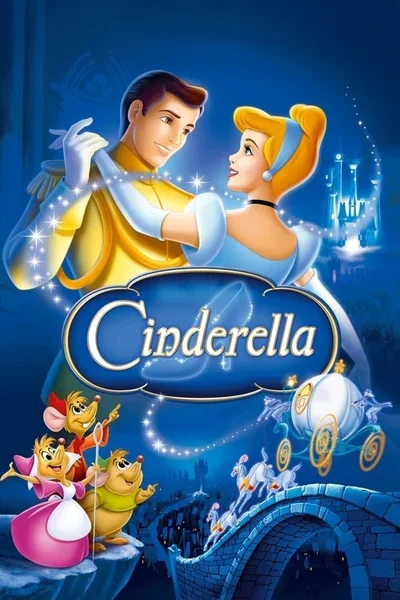
Cinderella
Prince Charming's singing voice; uncredited. Disney confirms the singing contribution, distinct from spoken dialogue.
Production artwork from the DailyTimeCapsule archive. Image credits
The Mike Douglas Show
Host and singer. The daytime variety and conversation programme that defined his television career.
Production artwork from the DailyTimeCapsule archive. Image credits
Rewatch notes
- Mike Douglas supplied Prince Charming's singing voice in the 1950 Cinderella.
- Kay Kyser gave him his professional name.
- His television star on the Hollywood Walk of Fame was dedicated in 1976.
Career highlights
Disney confirms the singing contribution, distinct from spoken dialogue.
The daytime variety and conversation programme that defined his television career.
Sources and image credits
Portrait: AFA / Ashley Famous Agency
https://commons.wikimedia.org/wiki/File:Mike_Douglas_1966.JPG
License: Public domain in the United States https://commons.wikimedia.org/wiki/File:Mike_Douglas_1966.JPG
- Cinderella — Production artwork from the DailyTimeCapsule archive.
https://d23.com/a-to-z/douglas-mike/ - The Mike Douglas Show — Production artwork from the DailyTimeCapsule archive.
https://interviews.televisionacademy.com/interviews/mike-douglas
Reviewed September 26, 2026. Source references and image credits are listed below. This is a selected profile, not a complete credit list.
- Television Academy: Mike Douglas oral history
https://interviews.televisionacademy.com/interviews/mike-douglas - D23: Mike Douglas and Cinderella
https://d23.com/a-to-z/douglas-mike/ - Hollywood Walk of Fame: Mike Douglas
https://walkoffame.com/mike-douglas/ - TV Guide: biography and awards
https://www.tvguide.com/celebrities/mike-douglas/bio/3000054713/ - Television Academy: remembrance
https://interviews.televisionacademy.com/news/talk-show-host-mike-douglas-has-died - Portrait provenance
https://commons.wikimedia.org/wiki/File:Mike_Douglas_1966.JPG
Production artwork is reused from the DailyTimeCapsule archive. The imagery represents the production and may not depict this actor or their particular season. Portrait and share-photo attribution appears beneath the portrait.
Corrections: hello@dailytimecapsule.com