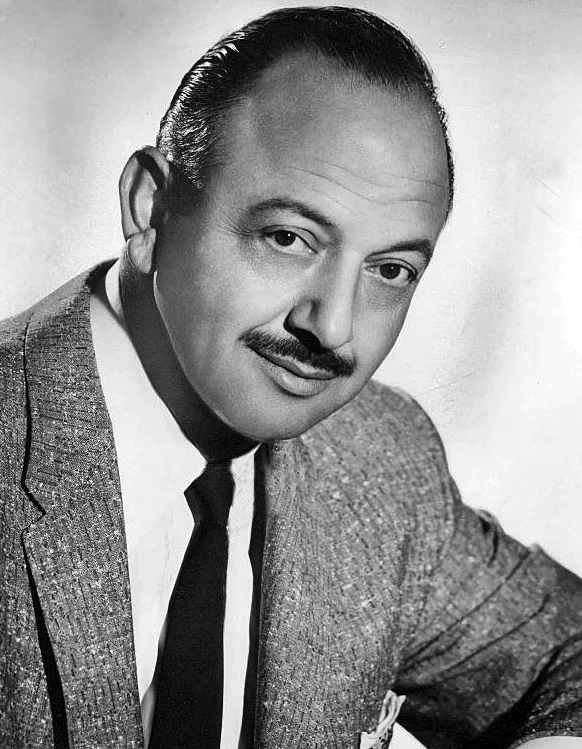
Mel Blanc publicity portrait (1959)
Mel Blanc
November 25, 1959 publicity photograph credited to Gene Hester.
Entry point: Looney Tunes (1930s–1980s voice work).
Explore the career in pictures
Updated
Mel Blanc was an American voice actor and radio performer whose characters include Bugs Bunny, Daffy Duck, Porky Pig, Sylvester and many other animation voices. His career also involved live comedy with Jack Benny, recordings and television work. The familiar voices can make it easy to overlook the performance behind them. A retrospective is especially rewarding when attention shifts from recognizing a sound to noticing how a character thinks: the speed of a reply, the shape of a complaint and the change of tone when an argument begins to go wrong.
Blanc was born in San Francisco in 1908 and grew up in Portland, Oregon. Local radio work gave him experience as a musician, writer and performer before his best-known Hollywood assignments. Programs such as the Hoot Owls and Cobwebs and Nuts belonged to a live entertainment world in which one person could supply several kinds of material. That background helps connect his later character voices to rhythm and ensemble comedy. The voice is more than an accent or a pitch; it has to enter at the right instant and leave room for another performer’s response.
His animation work at the studio producing Warner Bros. cartoons began in the 1930s. Bugs Bunny, Daffy Duck and Porky Pig became distinct personalities through the combined work of writers, directors, animators and performers. Blanc’s contribution should be understood within that collaboration rather than as the sole creation of every character he voiced. Listen to the difference between Bugs’s outward composure and Daffy’s rapidly escalating grievance. The contrast is not simply a higher or lower voice: each character organizes a sentence and a response to frustration in a different way.
The relationship between voice and animation becomes particularly clear when a scene changes pace. A character can appear to maintain control through a measured reply, then reveal panic when the rhythm breaks. Blanc’s work supplied many of those turns, while the drawing, timing and editing completed the effect. Comparing two characters in the same cartoon is an effective exercise because the surrounding production conditions stay relatively consistent. The performer has to make the exchange sound like a conflict between separate personalities even when the voices came from the same recording career.
Radio and television audiences also knew Blanc through The Jack Benny Program. He played human characters and supplied sounds, including Benny’s unreliable Maxwell automobile. A sputtering car and a comic conversation both require timing in relation to an audience and other performers. On radio, the sound has to establish something listeners cannot see; on television, a visible reaction can share the work. Those appearances give a different perspective from an animated short, placing the voice performer inside a continuing live-action ensemble rather than entirely behind a drawn character.
Television animation extended his work into roles including Barney Rubble and Dino in The Flintstones and Cosmo Spacely in The Jetsons. These are separate characters within different family-comedy settings. Their voices help establish relationships at home and at work, while recurring episodes give audiences time to recognize habits and expectations. A comparison with a theatrical Looney Tunes short can focus on scale: an exaggerated one-reel confrontation and a recurring television neighborhood may use the same performer’s range for different rhythms, lengths and kinds of familiarity.
Blanc died in 1989, leaving a body of work that continues to be heard through the productions themselves. The gallery presents a 1959 publicity portrait and a separate 1976 photograph by Alan Light, showing the performer behind the voices. For a listening route, compare Bugs and Daffy, continue to a Jack Benny exchange, then hear Barney beside Fred Flintstone. That sequence makes voice acting visible as a craft of character, timing and partnership. It also keeps the individual performance within the larger collaborative work that made each program or cartoon possible.
Two separate photographs, from 1959 and 1976, show the performer whose work was usually heard through animated characters.
Mel Blanc
November 25, 1959 publicity photograph credited to Gene Hester.
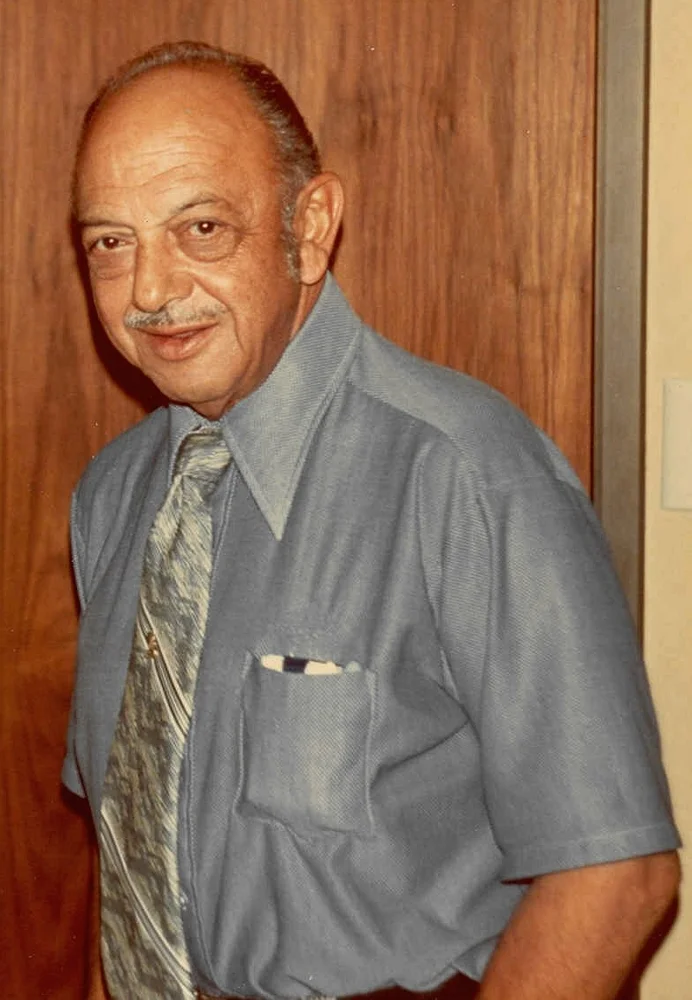
Mel Blanc
Distinct 1976 photograph; not a crop of the earlier portrait.
Oregon Historical Society: Mel Blanc biography
https://www.oregonencyclopedia.org/articles/blanc_mel/
Mel Blanc: radio, animation and television credits
https://en.wikipedia.org/wiki/Mel_Blanc
Smithsonian: Bugs Bunny animation cel and history
https://americanhistory.si.edu/collections/object/nmah_681403
Commons: portrait provenance and license
https://commons.wikimedia.org/wiki/File:Mel%20Blanc%20-%201959.jpg
Corrections: hello@dailytimecapsule.com
Work: Mel Blanc - 1959.jpg
Creator: Gene Hester
Date: 1959-11-25
Original source: https://commons.wikimedia.org/wiki/File:Mel%20Blanc%20-%201959.jpg
Primary archive: https://commons.wikimedia.org/wiki/File:Mel%20Blanc%20-%201959.jpg
License: Public domain
License URI: https://commons.wikimedia.org/wiki/File:Mel_Blanc_-_1959.jpg
Changes: Resized and converted to WebP; portrait also placed in a titled share image. No endorsement implied.
Rights scope: No endorsement implied. See the stated license and modification notice.
Work: Mel Blanc (1976).jpg
Creator: Alan Light
Date: 1976
Original source: https://commons.wikimedia.org/wiki/File:Mel%20Blanc%20%281976%29.jpg
Primary archive: https://commons.wikimedia.org/wiki/File:Mel%20Blanc%20%281976%29.jpg
License: CC BY 2.0
License URI: https://creativecommons.org/licenses/by/2.0
Changes: Resized and converted to WebP; portrait also placed in a titled share image. No endorsement implied.
Rights scope: No endorsement implied. See the stated license and modification notice.