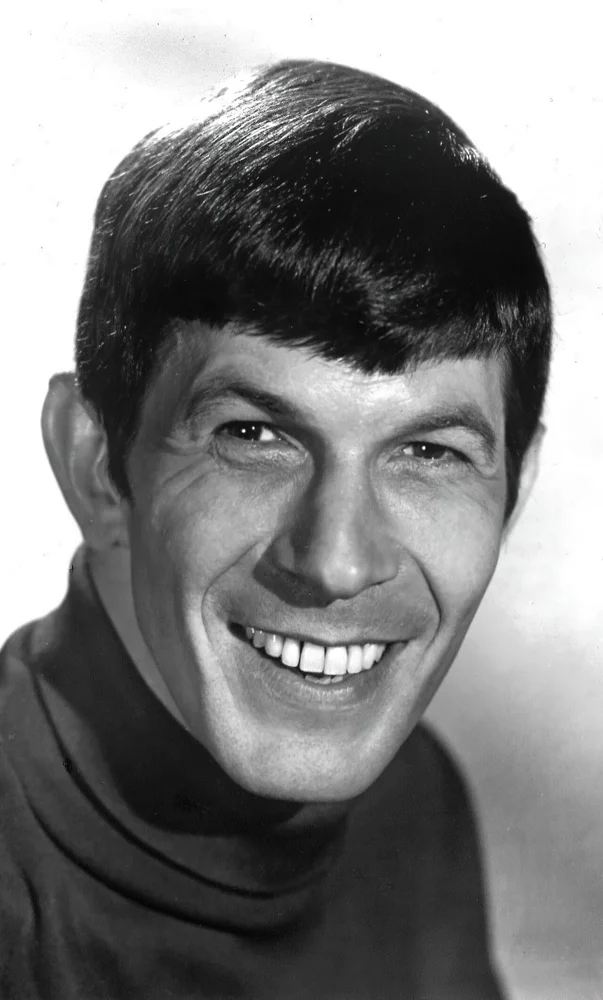
NBC publicity portrait (Mid-1960s)
Leonard Nimoy
A publicity portrait of the actor without Spock makeup.
Entry point: Star Trek (1966–1969).
Explore the career in pictures
Updated
Leonard Nimoy was an American actor, director and photographer whose portrayal of Spock became one of television's most recognizable characterizations. The role connected him to Star Trek across decades, from the original series to films and later appearances. His career also included the spy series Mission: Impossible, stage work and filmmaking outside the Star Trek setting. Spock provides an immediate point of recognition, but looking beyond the pointed ears reveals a performer and creative artist with several distinct professional lives.
Nimoy was born in Boston in 1931 to immigrant parents. His own recollections connected that background with the later experience of playing an outsider in science fiction. He also explained that the hand gesture he introduced as the Vulcan greeting drew on a blessing he had seen in his family's religious life. The gesture's screen use is therefore linked to a personal memory, rather than being only a piece of futuristic decoration. It became one of the small, deliberate choices through which he helped define the character.
The original Star Trek aired from 1966 to 1969, with Nimoy as Spock alongside William Shatner's Captain Kirk and DeForest Kelley's Dr. McCoy. Spock's emphasis on logic creates a continuing contrast with the people around him. The performance is especially interesting when emotion is present but carefully controlled: a restrained response can carry meaning without becoming a large gesture. This makes the character a useful centre for stories about difference, judgment and cooperation within the Enterprise crew, as well as for the series' adventures.
After the original series, Nimoy played Paris in Mission: Impossible from 1969 to 1971. Paris was a member of the Impossible Missions Force whose skills included disguise and performance. That assignment creates a striking comparison with Spock. Instead of maintaining one immediately recognizable appearance, Paris participates in operations that depend on taking on other identities. The CBS publicity photograph in this gallery belongs to that television chapter, while the separate NBC portrait records Nimoy as a performer rather than as either of those fictional characters.
Nimoy's work also included hosting In Search of... and appearing in the 1978 version of Invasion of the Body Snatchers. These projects use his presence in different ways: as a presenter addressing viewers, and as an actor within an unsettling dramatic ensemble. They offer useful alternatives for anyone who knows him mainly through Star Trek. A familiar voice can provide continuity across very different material, but the responsibilities of narration, presentation and character acting remain distinct parts of the professional work.
As a feature director, Nimoy made Star Trek III: The Search for Spock in 1984 and Star Trek IV: The Voyage Home in 1986. In a recollection preserved by StarTrek.com, he described asking for more creative freedom after the third film and researching ideas for the next one. That account puts the later film within his development behind the camera. He subsequently directed Three Men and a Baby, released in 1987, extending his filmmaking career into comedy outside the franchise most closely associated with his name.
Nimoy died in 2015. His work as a photographer and author also formed part of a life that cannot be contained by one screen role. For a compact retrospective, compare an original Star Trek episode with Mission: Impossible, then watch one of the films he directed. The progression makes it easier to separate the actor's choices from the character's familiar iconography. It also reveals continuity in his interest in performance and storytelling, whether he was visible in front of the camera or shaping a production from behind it.
Distinct NBC and CBS publicity photographs place Nimoy’s familiar face alongside his Mission: Impossible work.
Leonard Nimoy
A publicity portrait of the actor without Spock makeup.
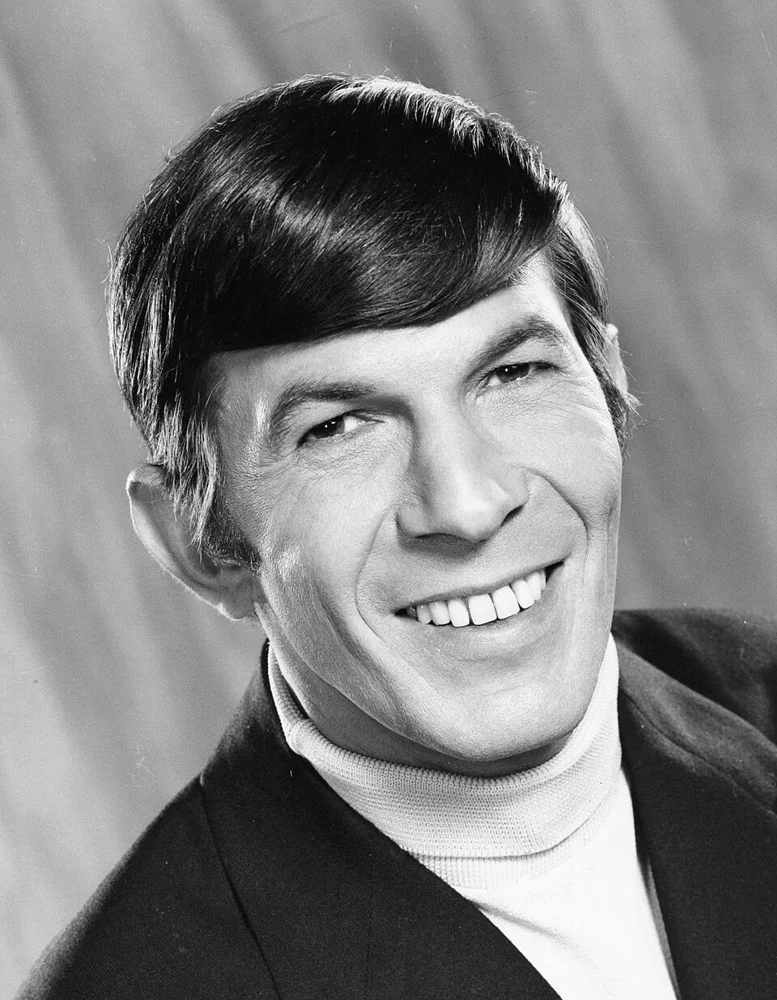
Paris
CBS publicity photograph from Nimoy’s time in the spy series.
StarTrek.com: Nimoy in his own words
https://www.startrek.com/news/leonard-nimoy-his-own-words
Career biography
https://en.wikipedia.org/wiki/Leonard_Nimoy
TIME: career beyond Spock
https://time.com/3726395/leonard-nimoy-dead-career-besides-spock/
Commons: portrait provenance and license
https://commons.wikimedia.org/wiki/File:Leonard%20Nimoy%20mid%201960s.JPG
Corrections: hello@dailytimecapsule.com
Work: Leonard Nimoy mid 1960s.JPG
Creator: NBC Television
Date: No date shown. The photo is from the television program Star Trek , which aired on NBC from 1966 to 1969 .
Original source: https://commons.wikimedia.org/wiki/File:Leonard%20Nimoy%20mid%201960s.JPG
Primary archive: https://commons.wikimedia.org/wiki/File:Leonard%20Nimoy%20mid%201960s.JPG
License: Public domain
License URI: https://commons.wikimedia.org/wiki/File:Leonard_Nimoy_mid_1960s.JPG
Changes: Resized and converted to WebP; portrait also placed in a titled share image. No endorsement implied.
Rights scope: No endorsement implied. See the stated license and modification notice.
Work: Leonard Nimoy Mission Impossible.jpg
Creator: CBS Television
Date: August 18, 1973 stamp
Original source: https://commons.wikimedia.org/wiki/File:Leonard%20Nimoy%20Mission%20Impossible.jpg
Primary archive: https://commons.wikimedia.org/wiki/File:Leonard%20Nimoy%20Mission%20Impossible.jpg
License: Public domain
License URI: https://commons.wikimedia.org/wiki/File:Leonard_Nimoy_Mission_Impossible.jpg
Changes: Resized and converted to WebP; portrait also placed in a titled share image. No endorsement implied.
Rights scope: No endorsement implied. See the stated license and modification notice.