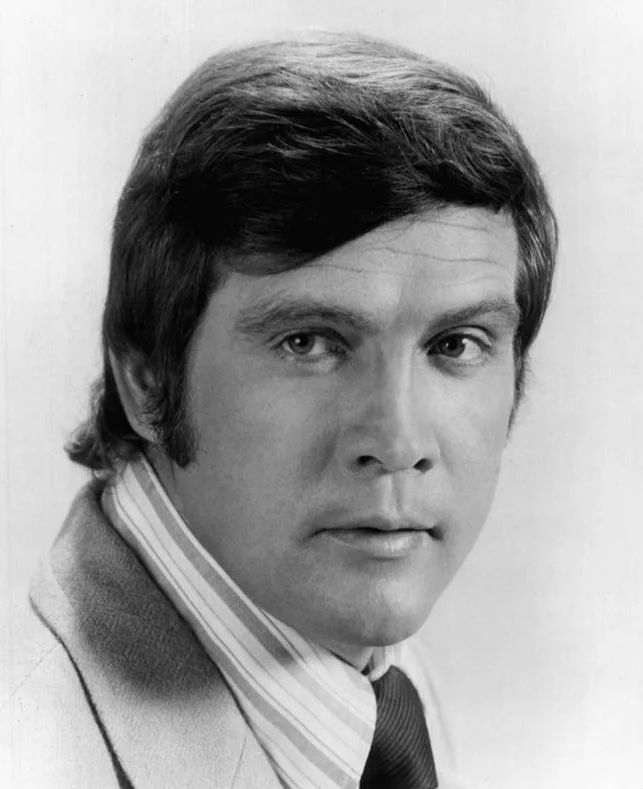
ABC publicity portrait (1972)
Lee Majors
ABC Television publicity photograph dated August 8, 1972; public-domain source record.
Entry point: The Six Million Dollar Man (1973).
Explore the career in pictures
Updated
Lee Majors became one of American television's most recognizable leading men through a succession of very different series. Heath Barkley in The Big Valley, Steve Austin in The Six Million Dollar Man and Colt Seavers in The Fall Guy place the same performer in a Western family, a science-fiction adventure and a stunt-filled action comedy. Born in Wyandotte, Michigan, in 1939, Majors built a career that extended well beyond those three familiar introductions. Legal drama, television films, feature appearances and later supporting roles provide other ways to explore his work.
The Big Valley gave Majors a major early role opposite Barbara Stanwyck. He played Heath Barkley during the Western's 1965–1969 run, becoming part of an ensemble rather than an isolated action hero. Watching that series before his later starring vehicles makes the differences particularly clear. Heath's place within the Barkley family gives scenes an ongoing personal context, while the Western setting places him among neighbors, rivals and relatives. The performance is a useful reminder that Majors's screen career was established before audiences began associating him with bionic technology.
The Six Million Dollar Man developed from a 1973 television movie into a weekly series. Majors played Steve Austin, an injured former astronaut whose rebuilt body supplies the premise for its adventures. For the viewer, the technology works because the performer gives the extraordinary situation an ordinary human center. A good starting point is to watch the original film and then a series episode, observing the change from an origin story to a continuing character. Majors received a 1977 Golden Globe nomination for the role; the nomination should be distinguished from winning the award.
The Fall Guy, which ran from 1981 to 1986, offered another variation on his leading-man identity. Colt Seavers works as a stuntman and bounty hunter, combining Hollywood work with episodic adventures. The role invites a different viewing comparison from Steve Austin: the physical dangers belong to a world that also treats screen spectacle as a job. Majors's presence links the two series, but their characters and premises remain distinct. An episode of each provides a better introduction to that contrast than simply grouping both under the broad label of action television.
Other ensemble work helps fill the space between those signature roles. In Owen Marshall, Counselor at Law, Majors played Jess Brandon alongside Arthur Hill's title character. The legal setting puts attention on conversations, cases and the relationship between colleagues. Later television reunions brought Majors back together with Lindsay Wagner for The Return of the Six Million Dollar Man and the Bionic Woman, Bionic Showdown and Bionic Ever After? Those films belong to the continuing bionic characters' screen history rather than being new series with unrelated roles.
Majors also worked outside the franchises most closely associated with his name. Film credits include Will Penny, The Liberation of L.B. Jones and The Norsemen, while later television appearances include Ash vs Evil Dead. In the Hallmark film Eat, Play, Love he plays Dr. Isaac Monroe, with Lindsay Wagner also in the cast as Mrs. Gilbert. That pairing is worth noting without confusing their characters with Steve Austin and Jaime Sommers. Familiar performers can meet again in a different story, and recognizing that distinction is part of following a long career accurately.
The gallery places an ABC publicity portrait from 1972 beside a separate 2017 Florida Supercon photograph. Together they document different periods of Majors's public career rather than presenting a modern event image as a scene from an older series. For a rewatch, begin with Heath Barkley, move to Steve Austin and then try Colt Seavers. Follow those with a legal-drama episode or a later television film. That route keeps the familiar hits in view while showing how one actor's screen identity changes with the ensemble, format and kind of story around him.
An ABC publicity portrait from 1972 and a separately credited convention photograph from 2017 show two periods of Lee Majors’s public career. These are photographs of the performer, not scenes from the later film adaptation of The Fall Guy.
Lee Majors
ABC Television publicity photograph dated August 8, 1972; public-domain source record.
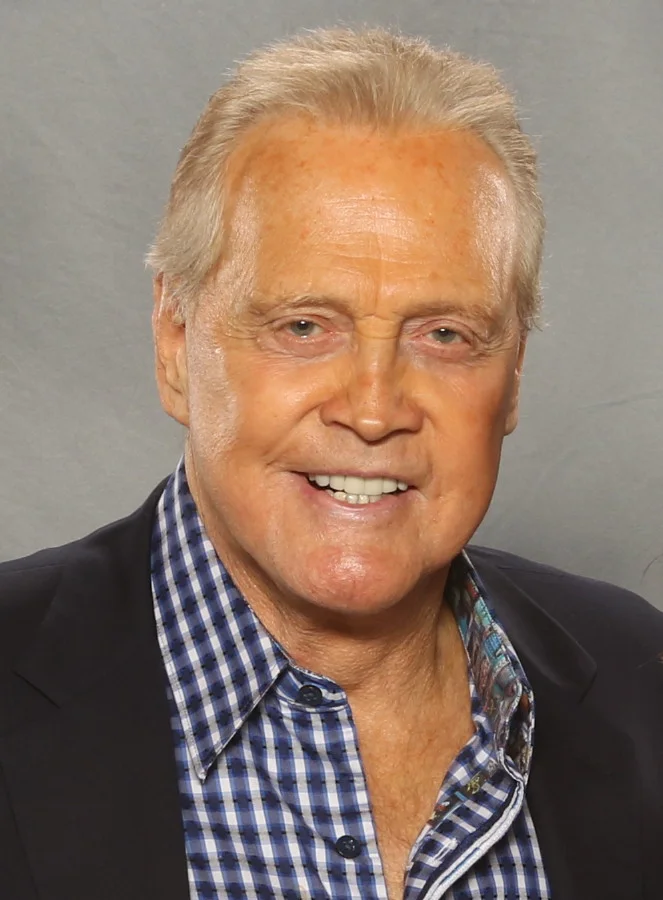
Lee Majors at a public fan event
A distinct July 15, 2017 photograph credited to Florida Supercon; licensed CC BY 2.0.
Golden Globes: Lee Majors career and 1977 nomination
https://goldenglobes.com/person/lee-majors/
Hallmark: Lee Majors as Dr. Isaac Monroe
https://www.hallmarkchannel.com/eat-play-love/cast/lee-majors
Paley Center: Owen Marshall, Eulogy for a Wide Receiver
https://www.paleycenter.org/collection/item?item=T82%3A0606
Lee Majors: television career and character credits
https://www.tvinsider.com/people/lee-majors/
Commons: portrait provenance and license
https://commons.wikimedia.org/wiki/File:Lee%20Majors%201972.JPG
Corrections: hello@dailytimecapsule.com
Work: Lee Majors 1972.JPG
Creator: ABC Television
Date: 1972-08-08
Original source: https://commons.wikimedia.org/wiki/File:Lee%20Majors%201972.JPG
Primary archive: https://commons.wikimedia.org/wiki/File:Lee%20Majors%201972.JPG
License: Public domain
License URI: https://commons.wikimedia.org/wiki/File:Lee_Majors_1972.JPG
Changes: Resized and converted to WebP; portrait also placed in a titled share image. No endorsement implied.
Rights scope: No endorsement implied. See the stated license and modification notice.
Work: Lee Majors July 2017.jpg
Creator: Florida Supercon
Date: 2017-07-15 15:50:20
Original source: https://commons.wikimedia.org/wiki/File:Lee%20Majors%20July%202017.jpg
Primary archive: https://commons.wikimedia.org/wiki/File:Lee%20Majors%20July%202017.jpg
License: CC BY 2.0
License URI: https://creativecommons.org/licenses/by/2.0
Changes: Resized and converted to WebP; portrait also placed in a titled share image. No endorsement implied.
Rights scope: No endorsement implied. See the stated license and modification notice.