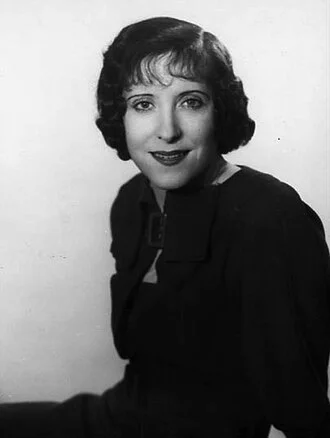
CBS radio portrait (1936-1950)
Gracie Allen
CBS radio publicity portrait; the release does not establish a precise year.
Entry point: The George Burns and Gracie Allen Show (1950-1958).
Explore the career in pictures
Updated
Gracie Allen turned conversational misunderstanding into the center of a durable comedy act. Alongside George Burns, her husband and professional partner, she played a woman who could follow an apparently sensible train of thought into an entirely unexpected conclusion. Burns supplied the questions and reactions; Allen supplied the logic that rearranged the world around them. The act traveled from vaudeville to radio, films and television, with Allen's composed delivery keeping the fictional Gracie distinct from a performer merely signaling that she was telling a joke.
Allen was born in San Francisco. The Radio Hall of Fame recounts how the partnership initially assigned Burns the comic material and Allen the straight lines. When her delivery produced the stronger laughter, they reversed that arrangement. The change put her at the center of the act and made his reactions its supporting structure. A photograph published in the National Vaudeville Artists' 1924 souvenir volume, reproduced in the gallery, shows the young pair together. It records the stage partnership well before the household setting through which television audiences would come to know them.
Their first radio appearance came during an English tour in 1929, on the BBC, according to the Radio Hall of Fame. They joined Guy Lombardo's program in 1932, and the comedy eventually became its main attraction. Allen's fictional search for a missing brother crossed into other broadcasts, allowing her character to disrupt different kinds of programs. By 1942, the format had become a situation comedy in which George and Gracie played fictional versions of themselves. That change gave the conversations a recurring domestic world while preserving the couple's established performance relationship.
Films provided another setting for the act. In George Stevens's A Damsel in Distress, released in 1937, Allen plays Gracie, the stenographer who accompanies Fred Astaire's entertainer Jerry Halliday and Burns's publicist George. AFI's cast and synopsis distinguish these roles from the performers' everyday identities. Joan Fontaine plays Lady Alyce Marshmorton, whose romantic predicament brings the visitors into an English country-house story. Allen's familiar screen name could make the character look autobiographical, but the film places the comic partnership inside a specifically constructed musical romance with its own people and circumstances.
Allen's persona could also spill beyond entertainment programs. A Library of Congress photograph documents her at the Women's National Press Club's March 9, 1940 event, alongside figures including Eleanor Roosevelt. Its contemporary caption identifies Allen as the woman who claimed over the air to be running for president. The record is evidence of a comic public performance, not a conventional political candidacy. It shows how recognizable the fictional Gracie had become: a broadcast premise could enter a Washington press-club gathering and remain intelligible beyond the usual setting of a Burns and Allen routine.
In 1950, Burns and Allen moved their radio formula to television. The Television Academy describes them playing television stars living beside Harry and Blanche Morton, with a short closing exchange recalling their vaudeville and radio work. The domestic stories and direct comic dialogue could coexist because viewers already knew the central relationship. The gallery pairs a CBS radio portrait, whose precise year is not established, with a separate October 1952 CBS television photograph. Allen appears in front of Burns in the latter image. Together with the vaudeville photograph, these are three distinct records of the evolving partnership.
Allen retired from show business in 1958 and died on August 27, 1964. The Television Academy records six Emmy nominations and her joint Hall of Fame recognition with Burns in 1988. Their radio show entered the Radio Hall of Fame in 1994. Her name also continues through the Gracie Awards, which honor achievement in media. Those later recognitions belong beside the surviving performances: Allen's importance lies in the precision with which she sustained her character's convictions, inviting an audience to understand the comic reasoning even as the people around Gracie struggled to keep up.
Three separate photographs connect Allen's vaudeville partnership, radio fame and television career.
Gracie Allen
CBS radio publicity portrait; the release does not establish a precise year.
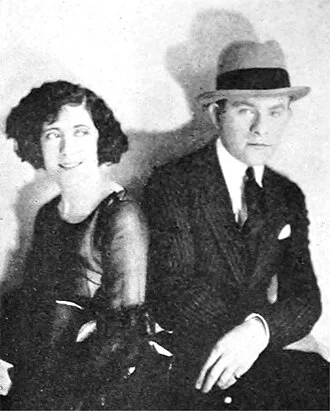
Gracie Allen with George Burns
Allen is seated at left and Burns at right in a photograph published in the 1924 National Vaudeville Artists souvenir.
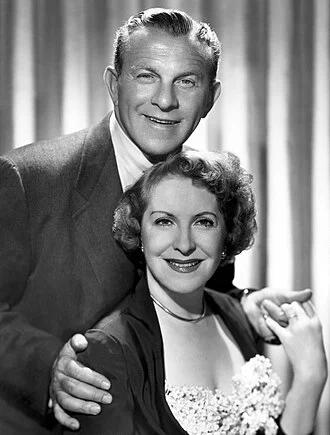
Gracie Allen with George Burns
Allen stands in front of Burns in this October 1952 publicity photograph.
Television Academy: Gracie Allen
https://www.televisionacademy.com/bios/gracie-allen
Radio Hall of Fame: Burns and Allen
https://www.radiohalloffame.com/burns-and-allen
AFI: A Damsel in Distress
https://catalog.afi.com/Film/5915-A-DAMSEL-IN-DISTRESS
Library of Congress: Gracie Allen at the 1940 press-club event
https://www.loc.gov/item/2016883959/
Alliance for Women in Media: Gracie Awards
https://allwomeninmedia.org/app/themes/allwomeninmedia/img/AWM%20Gala%20Prospectus%20NP.pdf
Commons: portrait provenance and license
https://commons.wikimedia.org/wiki/File:Gracie%20Allen%20CBS.JPG
Corrections: hello@dailytimecapsule.com
Work: Gracie Allen CBS.JPG
Creator: Columbia Broadcasting System-CBS Radio.
Date: Between 1936 and 1950; no precise year on the publicity release.
Original source: https://commons.wikimedia.org/wiki/File:Gracie%20Allen%20CBS.JPG
Primary archive: https://commons.wikimedia.org/wiki/File:Gracie%20Allen%20CBS.JPG
License: Public domain
License URI: https://commons.wikimedia.org/wiki/File:Gracie_Allen_CBS.JPG
Changes: Resized and converted to WebP; portrait also placed in a titled share image. No endorsement implied.
Rights scope: No endorsement implied. See the stated license and modification notice.
Work: Burns and Allen 1924.jpg
Creator: Unknown photographer
Date: by 1924
Original source: https://commons.wikimedia.org/wiki/File:Burns%20and%20Allen%201924.jpg
Primary archive: https://commons.wikimedia.org/wiki/File:Burns%20and%20Allen%201924.jpg
License: Public domain
License URI: https://commons.wikimedia.org/wiki/File:Burns_and_Allen_1924.jpg
Changes: Resized and converted to WebP; portrait also placed in a titled share image. No endorsement implied.
Rights scope: No endorsement implied. See the stated license and modification notice.
Work: Burns allen 1952.JPG
Creator: CBS Television
Date: 1952-10
Original source: https://commons.wikimedia.org/wiki/File:Burns%20allen%201952.JPG
Primary archive: https://commons.wikimedia.org/wiki/File:Burns%20allen%201952.JPG
License: Public domain
License URI: https://commons.wikimedia.org/wiki/File:Burns_allen_1952.JPG
Changes: Resized and converted to WebP; portrait also placed in a titled share image. No endorsement implied.
Rights scope: No endorsement implied. See the stated license and modification notice.