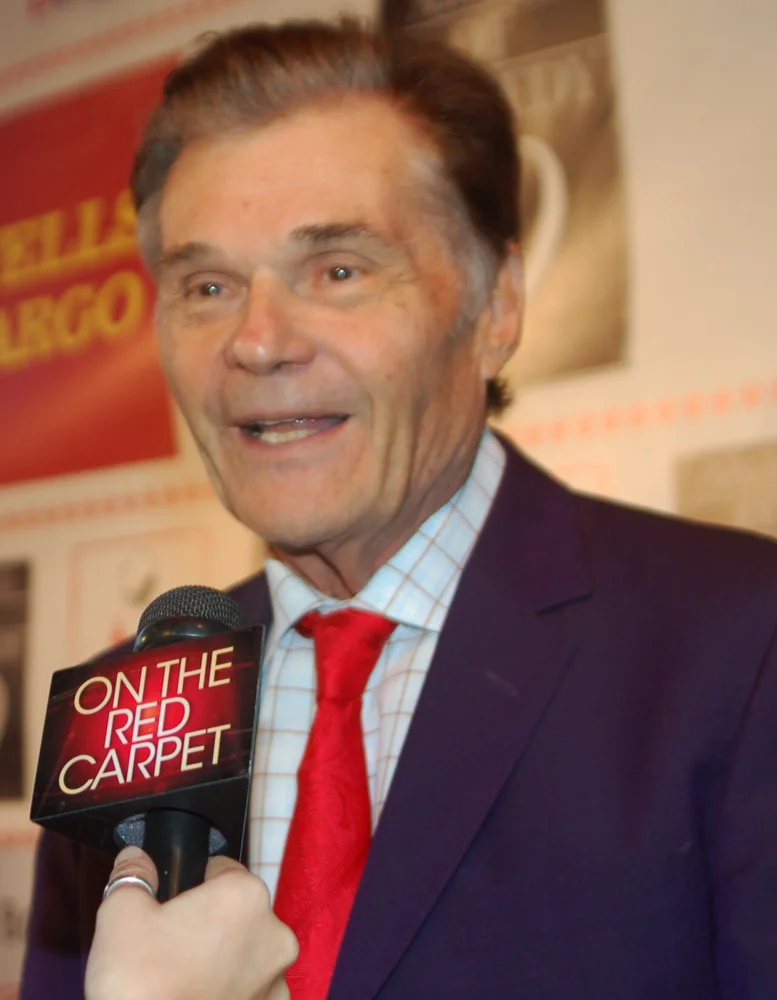
Night of Comedy benefit (2011)
Fred Willard
Willard at the Night of Comedy 9 benefit in Beverly Hills.
Entry point: Best in Show (2000).
Explore the career in pictures
Updated
Fred Willard made misplaced confidence one of American comedy's most dependable pleasures. His characters could sound wonderfully certain while misunderstanding the conversation unfolding around them. The television sidekick Jerry Hubbard in Fernwood 2 Night and dog-show commentator Buck Laughlin in Best in Show provide two especially clear introductions to that approach. Both parts put him beside someone trying to maintain a professional broadcast, then let his apparently helpful contributions disrupt its rules.
Willard's career connected improvisational comedy, television satire, ensemble films and recurring sitcom appearances. Fernwood 2 Night gave him a memorable partnership with Martin Mull in 1977. Decades later, Everybody Loves Raymond and Modern Family brought his work into family comedies with very different rhythms. The Television Academy's oral history covers those roles alongside earlier television experiences, offering a useful account of a performer whose familiarity came from many appearances rather than one continuous starring vehicle.
Best in Show is a particularly inviting starting point because Buck Laughlin has a job the audience immediately understands: explain a competition. The comedy comes from the widening distance between that responsibility and his remarks. Willard makes the broadcast voice sound reassuring even when the observation underneath it is hopelessly misplaced. The LA Philharmonic and PBS biographies single out this performance and its comedy honors, placing it among the defining film roles of his career.
Watch the conversational handoff rather than waiting only for the punch line. Willard often seems ready to cooperate; the interruption arrives in the content of what he says, not in an announcement that he intends to be outrageous. His composure allows another performer to register disbelief, embarrassment or determined professionalism. That division of labor helps explain why a supporting part can become so memorable without requiring the entire story to revolve around it.
Martin Mull's Barth Gimble and Willard's Jerry Hubbard form a revealing television pairing. The talk-show format supplies recognizable conventions, while their contrasting positions expose how fragile those conventions can be. His later work in Christopher Guest's comic ensembles belongs to a related tradition of characters taking their own small worlds very seriously. These collaborations reward attention to listening and response as much as to individual comic invention.
His sitcom appearances extended that approach into the family setting. As Hank MacDougall on Everybody Loves Raymond and Frank Dunphy on Modern Family, he joined established ensembles with their own histories and tensions. The Academy records Emmy recognition for both roles. Those appearances are useful companions to the broadcast spoofs: the setting changes, but an unexpected remark can still reorganize the emotional balance of a whole scene.
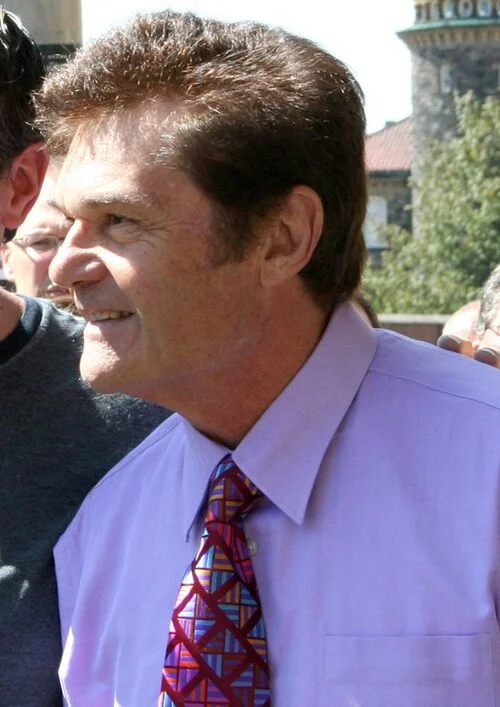
Willard's work is best approached across formats. Start with Best in Show, return to Fernwood 2 Night, then compare the later family-comedy roles. That sequence makes the continuity of his technique easier to see while preserving the differences between a film ensemble, a satirical talk show and a recurring television character. The photographs here record separate public appearances in 2011 and 2006; they are career portraits, not images from those fictional productions.
Distinct photographs from 2011 and 2006 document different moments in the career, with individual credits below.
Fred Willard
Willard at the Night of Comedy 9 benefit in Beverly Hills.
Fred Willard
Willard at the Toronto premiere of For Your Consideration.
Television Academy biography
https://www.televisionacademy.com/bios/fred-willard
Television Academy oral history
https://interviews.televisionacademy.com/interviews/fred-willard
LA Philharmonic artist biography
https://www.laphil.com/people/fred-willard
PBS Mark Twain Prize biography
https://www.pbs.org/weta/onstage/twain2002/bios/willard.html
Commons: portrait provenance and license
https://commons.wikimedia.org/wiki/File:FredWillardApr2011.jpg
Corrections: hello@dailytimecapsule.com
Work: FredWillardApr2011.jpg
Creator: Angela George
Date: 2011-04-30
Original source: https://commons.wikimedia.org/wiki/File:FredWillardApr2011.jpg
Primary archive: https://commons.wikimedia.org/wiki/File:FredWillardApr2011.jpg
License: CC BY-SA 3.0
License URI: https://creativecommons.org/licenses/by-sa/3.0
Changes: Resized and converted; share image adds text; applicable share-alike terms retained.
Rights scope: No endorsement implied. See the stated license and modification notice.
Work: FredWillard06TIFF.jpg
Creator: gdcgraphics
Date: 2006-09
Original source: https://commons.wikimedia.org/wiki/File:FredWillard06TIFF.jpg
Primary archive: https://commons.wikimedia.org/wiki/File:FredWillard06TIFF.jpg
License: CC BY 2.0
License URI: https://creativecommons.org/licenses/by/2.0
Changes: Resized and converted; share image adds text; applicable share-alike terms retained.
Rights scope: No endorsement implied. See the stated license and modification notice.