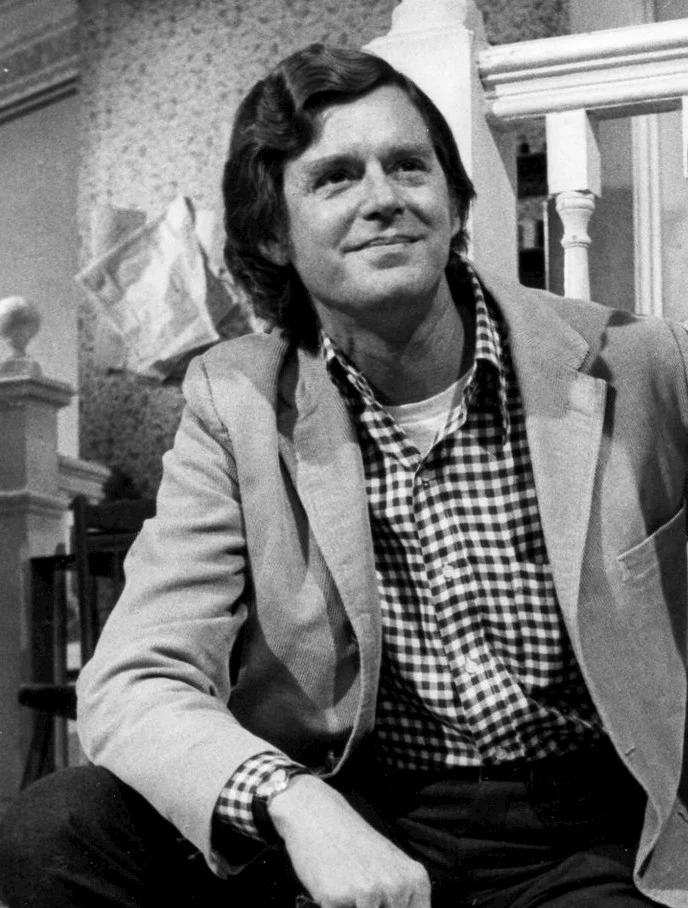
Photo: CBS Television. Cropped publicity photograph on The Waltons set, published in 1976. Public domain in the United States. Portrait resized and converted; share image cropped with text added. See the source and license details below. Image credits
Intro
Earl Hamner, Jr. was a writer, producer and narrator whose childhood in Virginia became the foundation for The Waltons. His voice supplied the adult perspective looking back on the family, while his writing and production work shaped its television world. This profile distinguishes those responsibilities from the actors who played the characters on screen. His career also encompassed novels, radio, anthology drama, animation and the very different family conflicts of Falcon Crest, giving him a wider range than the mountain-family association alone suggests.
Career snapshot
Born in Schuyler, Virginia, in 1923, Hamner grew up in a large family during the Depression. The Library of Virginia identifies his Nelson County childhood as the inspiration for The Waltons. His official biography describes Army service interrupting his studies, followed by radio work and a broadcasting degree at the University of Cincinnati in 1948. Employment at WLW and later NBC placed him in a profession that depended on words reaching listeners without a visible performer. His first novel, Fifty Roads to Town, appeared in 1953, establishing another outlet for the storytelling that television would later make widely familiar.
The entry point
The Homecoming became a Christmas television film before The Waltons began its regular series in 1972. Hamner's official biography connects the earlier story to his father's difficult journey home from work on a Christmas Eve. The series transformed family recollection into continuing drama rather than presenting a literal documentary of the Hamner household. Its narrator made that relationship to memory audible. For a focused revisit, listen to what the voice adds before and after a scene: it can give an ordinary incident the significance of something remembered many years later.
Screen identity and style
Hamner's screen identity is unusual in a cast guide because much of it is heard or written rather than embodied in a recurring visible character. The Television Academy identifies him as the creator and narrator of The Waltons. That distinction helps explain the programme's point of view: the audience encounters the family's immediate experiences and a later voice reflecting on them. A useful comparison is to watch a scene for its own dramatic action, then consider how the surrounding narration changes its emotional scale. Writing, performance and recollection work together without becoming the same task.
Collaborations and patterns
The Television Academy's four-hour interview, recorded in 2003, follows Hamner from early television assignments on Today, Wide, Wide World and The United States Steel Hour to his scripts for The Twilight Zone. It also records his account of adapting E.B. White's Charlotte's Web for the 1973 animated feature. Those assignments required different kinds of collaboration: supplying material within an anthology's format, adapting another writer's novel and overseeing a continuing series with its own cast. His interview offers firsthand context for the choices behind the credits rather than only a list of finished productions.
Era reflection
Falcon Crest provides a revealing comparison with The Waltons. Hamner's later series moved into the world of a wine-country dynasty, while his earlier success was rooted in memories of economic hardship and family closeness. Both belonged to continuing television drama, but their settings and conflicts asked audiences to engage in different ways. The Academy interview also discusses Apple's Way, The Young Pioneers, Brewster Place and Snowy River: The McGregor Saga. The gallery selects a few major writing and production milestones, labeling them accordingly so that authorship is not mistaken for an acting appearance.
Legacy and rediscovery
Hamner died in 2016. His papers preserve scripts, correspondence, photographs, publicity and other records of a career extending across media, with The Waltons and Falcon Crest prominent in the archival description. Those materials complement the finished programmes: one preserves what viewers saw and heard, while the other records the work required to make it. His lasting contribution lies partly in bringing a specific remembered place into widely shared television. The narrator's familiarity, the family stories and the movement between literary and broadcast forms remain useful routes into his work.
A career in pictures
Selected career milestones. Years identify the production or labeled milestone; recurring actors may join a series later. Artwork represents the production and may show other cast members. Select an image for a larger view.
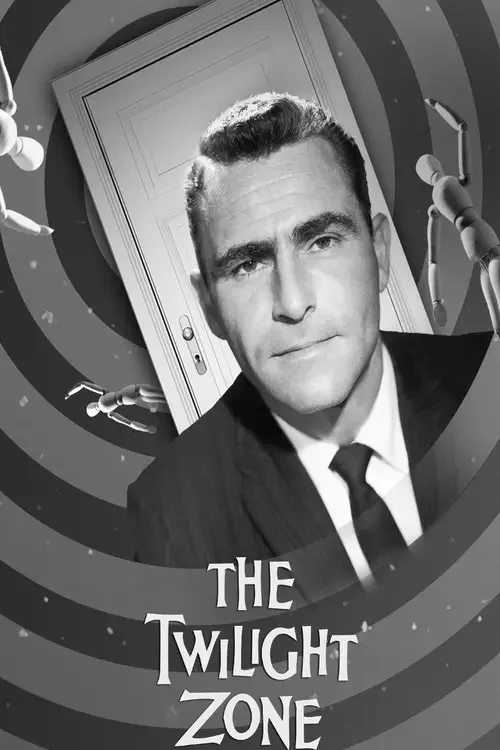
The Twilight Zone
Contributing writer to the original series. 1959 is the series premiere; Hamner's scripts came later. This is a writing credit.
Production artwork from the DailyTimeCapsule archive. Image credits
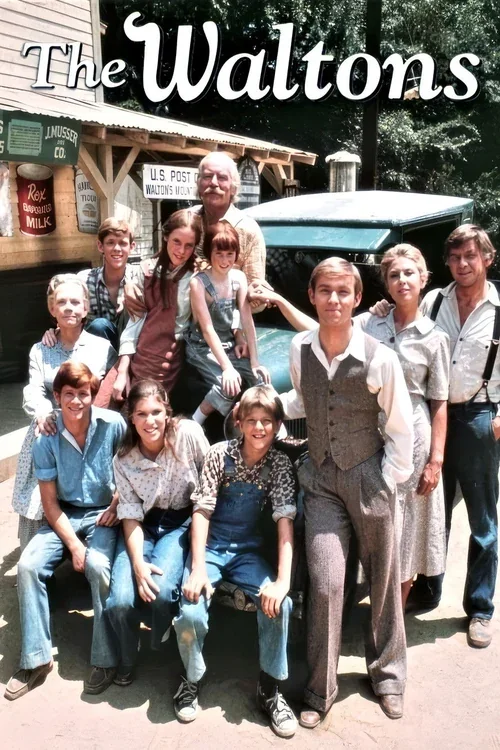
The Waltons
Creator, writer, producer and narrator. The regular series followed The Homecoming television film.
Production artwork from the DailyTimeCapsule archive. Image credits
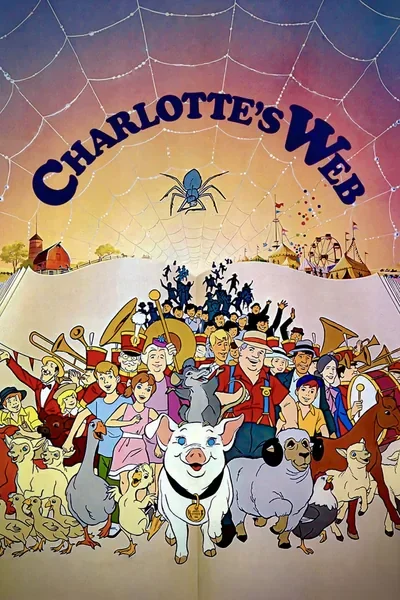
Charlotte's Web
Screenwriter. The animated adaptation of E.B. White's novel, not the later live-action film.
Production artwork from the DailyTimeCapsule archive. Image credits
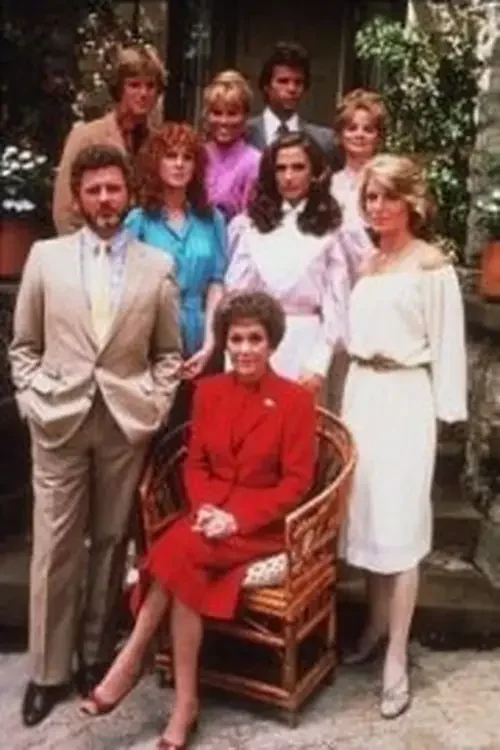
Falcon Crest
Creator and producer. A later family drama with a markedly different setting and tone.
Production artwork from the DailyTimeCapsule archive. Image credits
Rewatch notes
- Hamner supplied The Waltons' retrospective narration as well as creating the series.
- He wrote the screenplay for the 1973 animated Charlotte's Web.
- His early career included radio work and television anthology scripts.
Career highlights
1959 is the series premiere; Hamner's scripts came later. This is a writing credit.
The regular series followed The Homecoming television film.
The animated adaptation of E.B. White's novel, not the later live-action film.
A later family drama with a markedly different setting and tone.
Sources and image credits
Portrait: CBS Television
https://commons.wikimedia.org/wiki/File:Earl_Hamner_(cropped).jpg
License: Public domain in the United States https://commons.wikimedia.org/wiki/File:Earl_Hamner_(cropped).jpg
- The Twilight Zone — Production artwork from the DailyTimeCapsule archive.
https://interviews.televisionacademy.com/interviews/earl-hamner-jr - The Waltons — Production artwork from the DailyTimeCapsule archive.
https://www.earlhamner.com/about.html - Charlotte's Web — Production artwork from the DailyTimeCapsule archive.
https://interviews.televisionacademy.com/interviews/earl-hamner-jr - Falcon Crest — Production artwork from the DailyTimeCapsule archive.
https://interviews.televisionacademy.com/interviews/earl-hamner-jr
Reviewed September 26, 2026. Source references and image credits are listed below. This is a selected profile, not a complete credit list.
- Television Academy: Earl Hamner oral history
https://interviews.televisionacademy.com/interviews/earl-hamner-jr - Official Earl Hamner website: George Brosi biography
https://www.earlhamner.com/about.html - Television Academy: biography and awards
https://www.televisionacademy.com/bios/earl-hamner-jr - Library of Virginia: Earl Hamner
https://www.lva.virginia.gov/events/exhibitions/200-years-200-stories/stories/114 - Earl Hamner papers archival description
https://search.arvasarchive.org/catalog/vi_vi04618 - Portrait provenance
https://commons.wikimedia.org/wiki/File:Earl_Hamner_(cropped).jpg
Production artwork is reused from the DailyTimeCapsule archive. The imagery represents the production and may not depict this actor or their particular season. Portrait and share-photo attribution appears beneath the portrait.
Corrections: hello@dailytimecapsule.com