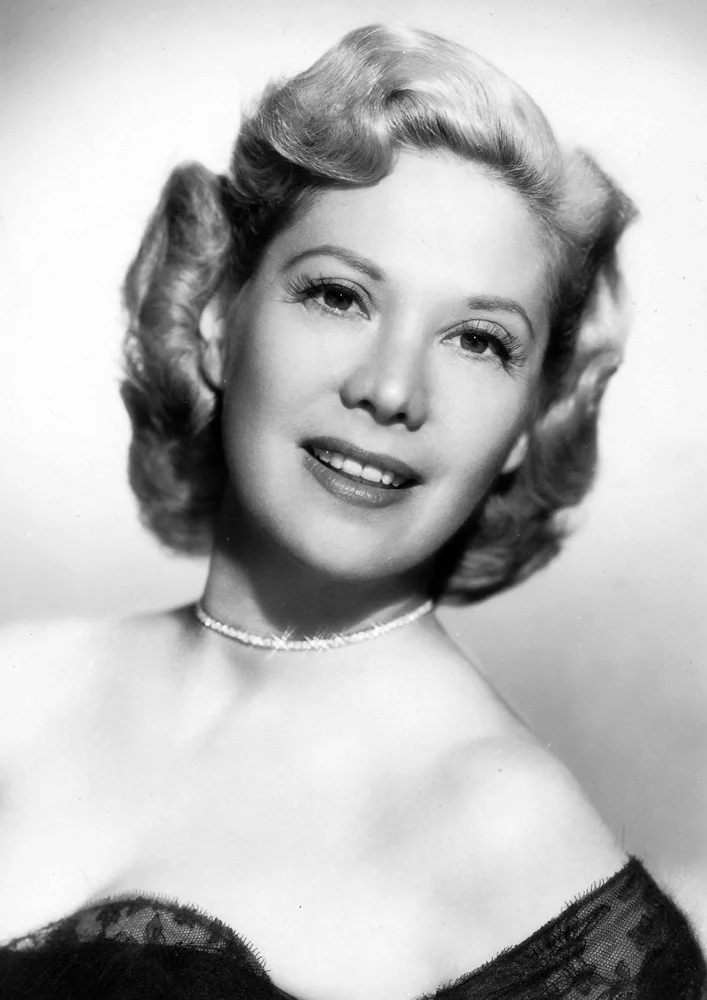
Dinah Shore publicity portrait (1951)
Dinah Shore
Paramount Pictures promotional portrait dated 1951.
Entry point: The Dinah Shore Chevy Show (1956–1963).
Explore the career in pictures
Updated
Dinah Shore was an American singer, actress and television host whose career linked popular recordings with the developing language of television variety. Her name became associated with musical performances, guests and an apparently easy conversation with the audience. That ease was a professional skill rather than the absence of one. A retrospective can follow how she moves between singing, introducing another performer and reacting to a comic interruption: the task is to keep a program coherent while allowing each guest or number to have its own identity.
Born in Winchester, Tennessee, in 1916, Shore grew up before television offered a national performance platform. Radio and recordings helped establish her as a singer, with songs including I’ll Walk Alone and Buttons and Bows among her familiar recordings. Her work emerged from the big-band era but was not confined to appearing as a vocalist in front of one band. Listening to a recording before watching a television appearance makes a useful comparison. The voice must carry the song on its own, while a camera adds expression, gesture and a more direct sense of address.
The Dinah Shore Chevy Show became one of her defining television settings from 1956 to 1963. Music, comedy and guest appearances required a host able to make transitions as well as deliver a prepared number. Sponsorship was visibly part of the program’s identity, reflecting the structure of American television variety at the time. A rewatch can attend to the joins between segments: the tone of an introduction, the return from a sketch and the way an audience is invited to receive a performer all contribute to the finished show.
Shore’s screen career also included feature-film appearances, but television gave her a particularly durable professional home. The medium could make a singer a regular presence in viewers’ living rooms rather than an occasional cinema attraction. Her work asks a different kind of attention from a dramatic role with a fictional biography. The host’s recognizable manner supplies continuity across changing guests and formats, and the performance depends on the audience feeling welcomed without losing the discipline needed to carry a broadcast through its sequence of planned events.
Daytime programs changed the balance of that work. Dinah’s Place ran from 1970 to 1974, followed by the syndicated Dinah! during the later 1970s. Conversation and demonstrations could share time with music, creating a different relationship between guest and host from a large evening variety number. Compare a musical introduction with a seated exchange: the same sense of hospitality has to operate at a different pace. The host must notice when to lead, when to listen and when a small reaction is more effective than another prepared question.
The gallery’s 1976 publicity photograph pairs Shore with George Carlin for Dinah and Her New Best Friends, while the earlier publicity portrait dates to 1951. The images make the change in professional context visible without pretending that a publicity pose is an unscripted conversation. They also offer a route through the collaborative side of variety television. A singer and a comedian bring different rhythms, and the host’s task is partly to make those differences belong within one program rather than forcing every guest into the same performance style.
Shore entered the Television Academy Hall of Fame in 1991 and died in 1994. Her legacy includes recordings, film work and a television career extending across several formats. Begin a retrospective with a song, continue to an evening variety segment and then compare a daytime interview. That route highlights the craft behind an intimate screen presence and the changes in what a television host was expected to do. The two photographs retain their original institutional credits and dates, preserving a record of both the recording artist and the later television personality.
A 1951 publicity portrait and a separate 1976 television publicity image span two different stages of Shore’s career.
Dinah Shore
Paramount Pictures promotional portrait dated 1951.
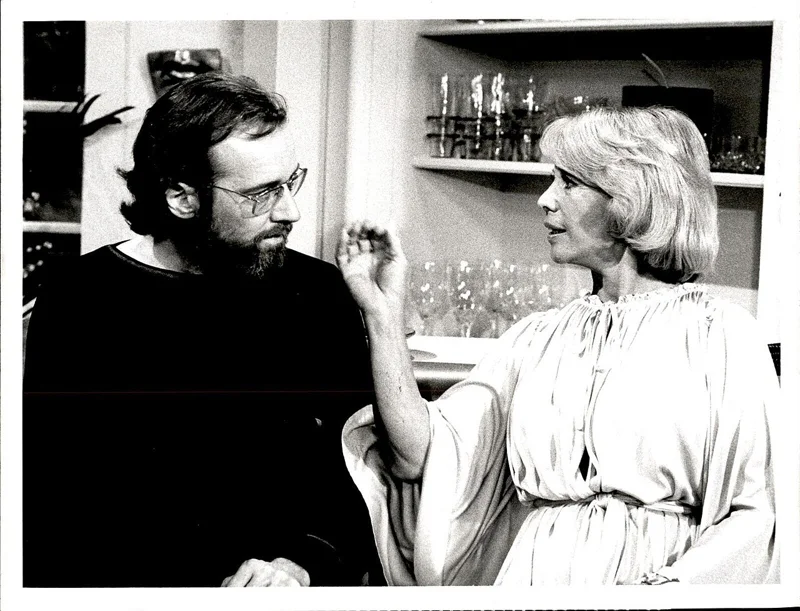
George Carlin and Dinah Shore
CBS publicity photograph for the 1976 programme.
Television Academy: Dinah Shore career and honours
https://www.televisionacademy.com/bios/dinah-shore
Television Academy: Dinah Shore Hall of Fame tribute
https://www.televisionacademy.com/features/news/hall-fame/dinah-shore-hall-fame-tribute
Dinah Shore: recordings and screen credits
https://en.wikipedia.org/wiki/Dinah_Shore
Commons: portrait provenance and license
https://commons.wikimedia.org/wiki/File:Dinah%20Shore%20-%20promo.jpg
Corrections: hello@dailytimecapsule.com
Work: Dinah Shore - promo.jpg
Creator: Paramount Pictures
Date: 1951
Original source: https://commons.wikimedia.org/wiki/File:Dinah%20Shore%20-%20promo.jpg
Primary archive: https://commons.wikimedia.org/wiki/File:Dinah%20Shore%20-%20promo.jpg
License: Public domain
License URI: https://commons.wikimedia.org/wiki/File:Dinah_Shore_-_promo.jpg
Changes: Resized and converted to WebP; portrait also placed in a titled share image. No endorsement implied.
Rights scope: No endorsement implied. See the stated license and modification notice.
Work: Dinah and Her New Best Friends (1976) publicity photo of George Carlin and Dinah Shore.jpg
Creator: CBS
Date: 1976
Original source: https://commons.wikimedia.org/wiki/File:Dinah%20and%20Her%20New%20Best%20Friends%20%281976%29%20publicity%20photo%20of%20George%20Carlin%20and%20Dinah%20Shore.jpg
Primary archive: https://commons.wikimedia.org/wiki/File:Dinah%20and%20Her%20New%20Best%20Friends%20%281976%29%20publicity%20photo%20of%20George%20Carlin%20and%20Dinah%20Shore.jpg
License: Public domain
License URI: https://commons.wikimedia.org/wiki/File:Dinah_and_Her_New_Best_Friends_%281976%29_publicity_photo_of_George_Carlin_and_Dinah_Shore.jpg
Changes: Resized and converted to WebP; portrait also placed in a titled share image. No endorsement implied.
Rights scope: No endorsement implied. See the stated license and modification notice.