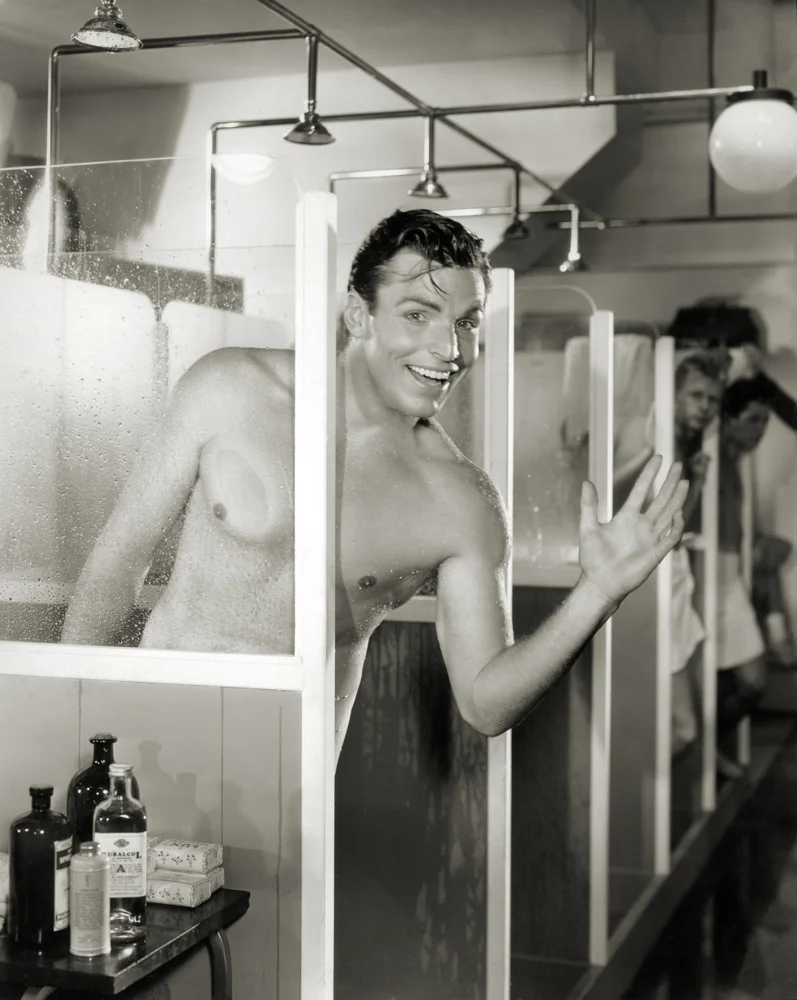
Photo: Paramount Pictures; photographer unidentified. Publicity portrait for Search for Beauty (1934). Public domain (US). Portrait resized and converted; share image cropped with text added. See the source and license details below. Image credits
Intro
Buster Crabbe was an Olympic swimming champion who became one of the familiar adventure heroes of American serial films. Born Clarence Linden Crabbe II on February 7, 1908, he played Tarzan, Flash Gordon and Buck Rogers before moving into westerns and television. His career joined an athlete's public reputation to a succession of fictional identities. He died on April 23, 1983. For many viewers, the most recognizable starting point remains the 1936 Flash Gordon serial, where his athletic presence anchors a world of fantastic inventions and hazards.
Career snapshot
Crabbe was born in Oakland and grew up in Hawaii, where his family moved when he was very young. He attended Punahou and later the University of Southern California. At the 1928 Olympics he won bronze in the 1,500-metre freestyle; in Los Angeles in 1932 he won the 400-metre freestyle gold medal. These were achievements in competitive swimming before his film fame. They help explain why casting him as an energetic adventure hero was more than a decision based on appearance alone.
The entry point
Flash Gordon was released as a thirteen-chapter serial in 1936. Jean Rogers plays Dale Arden, Frank Shannon is Dr. Zarkov, Charles Middleton plays Ming, and Priscilla Lawson appears as Princess Aura. Unlike a single feature designed to resolve its story in one sitting, the serial repeatedly creates a crisis to bring audiences back. Watch how Crabbe gives those interruptions a clear centre: the spectacle can become elaborate, but the immediate action remains readable through his reactions and movement. UCLA's archive programme places the serial within the ancestry of later science-fiction blockbusters.
Screen identity and style
Before Flash Gordon, Crabbe starred in Tarzan the Fearless in 1933. Producer Sol Lesser's serial followed the success of MGM's Tarzan the Ape Man, starring fellow swimmer Johnny Weissmuller. The two actors and productions should not be confused. Crabbe's version was made in twelve chapters; a surviving feature version draws on the early part of that serial. TCM also identifies King of the Jungle, in which he played Kaspa, as an early adventure assignment. These roles introduced an actor whose physical performance could carry scenes with relatively little dialogue.
Collaborations and patterns
Crabbe returned for Flash Gordon's Trip to Mars in 1938 and Flash Gordon Conquers the Universe in 1940. Between those productions, he played Buck Rogers in the 1939 serial. They are separate heroes, even though the same performer and a similar chapter-based format connect them. His subsequent western work included Billy the Kid and Billy Carson films. A career tour benefits from keeping each title, character and release date distinct rather than treating every vintage space or western image as interchangeable evidence of his work.
Era reflection
Television provided another recurring adventure role in Captain Gallant of the Foreign Legion, which began in 1955. Crabbe played Captain Michael Gallant, and his son Cullen, billed as Cuffy Crabbe, appeared as Cuffy Sanders. Fuzzy Knight played Fuzzy. The programme moved his familiar heroic image into the home-viewing schedule of the 1950s. Compare a television episode with a Flash Gordon chapter: both depend on returning viewers, but the settings, supporting relationships and scale of the action create different rhythms for the leading performer.
Legacy and rediscovery
Swimming remained part of Crabbe's life beyond his screen work, through aquatic shows and later masters competition. Olympedia records an age-group world record in the 400-metre freestyle when he was sixty-three. His biography therefore continues past the familiar athlete-to-actor transition. The portrait here comes from Search for Beauty in 1934; the gallery follows Tarzan, Flash Gordon and Captain Gallant across more than two decades. Together they offer a route through his career without substituting imagery from the later films and television remakes that reused those famous character names.
A career in pictures
Selected career milestones. Years identify the production or labeled milestone; recurring actors may join a series later. Artwork represents the production and may show other cast members. Select an image for a larger view.
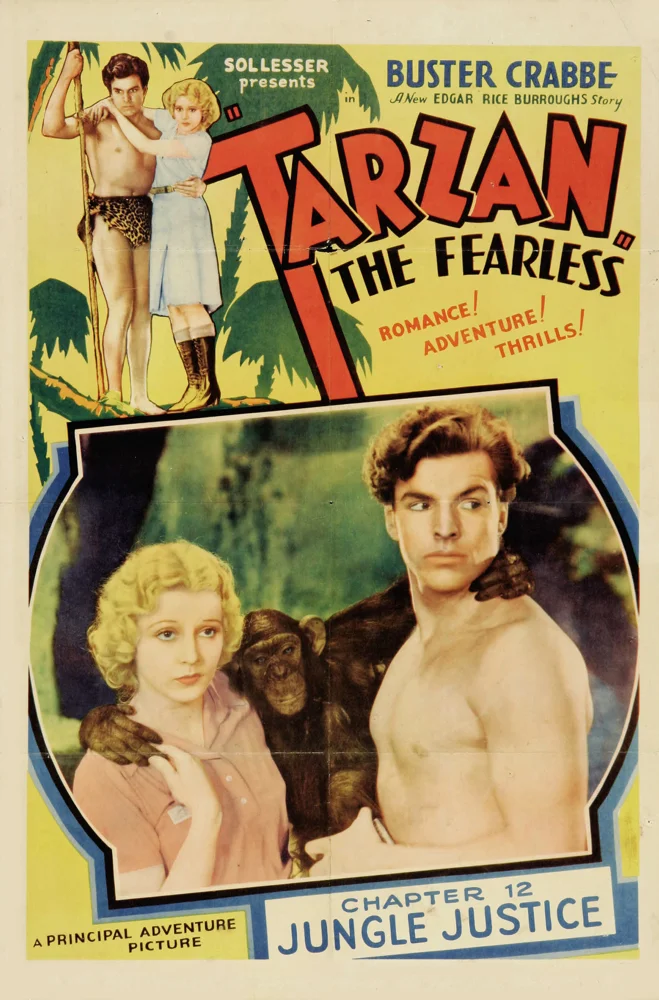
Tarzan the Fearless
Tarzan. Poster for chapter twelve of Crabbe's serial.
Principal Distributing Corporation. Public domain (US, no copyright notice). https://commons.wikimedia.org/wiki/Template:PD-US-no_notice Image credits
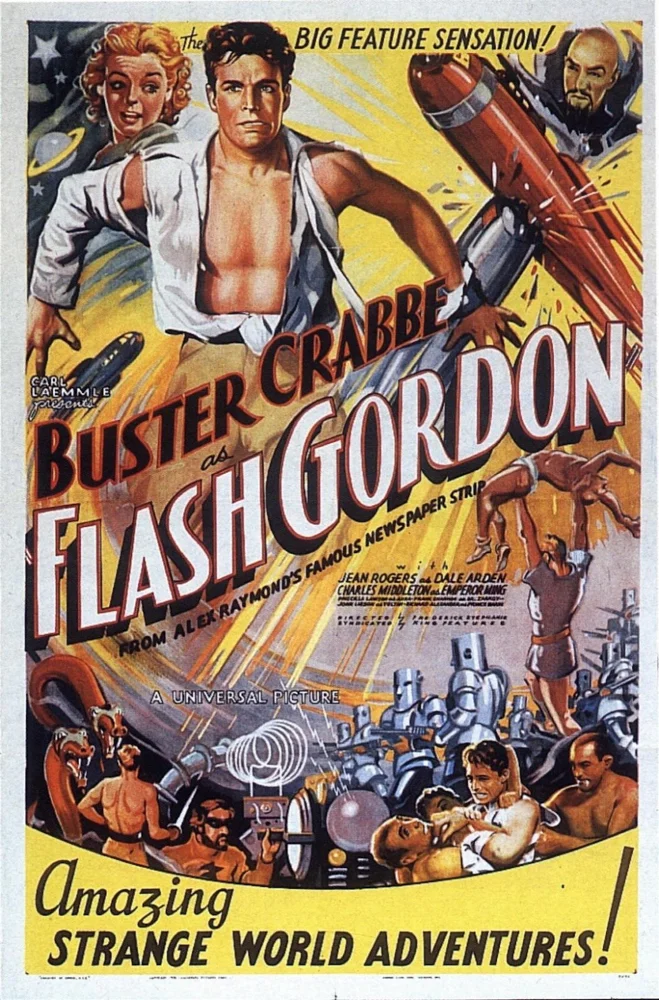
Flash Gordon
Flash Gordon. The 1936 serial, not the 1980 feature.
Universal. Public domain (US, copyright not renewed). https://commons.wikimedia.org/wiki/Template:PD-US-not_renewed Image credits
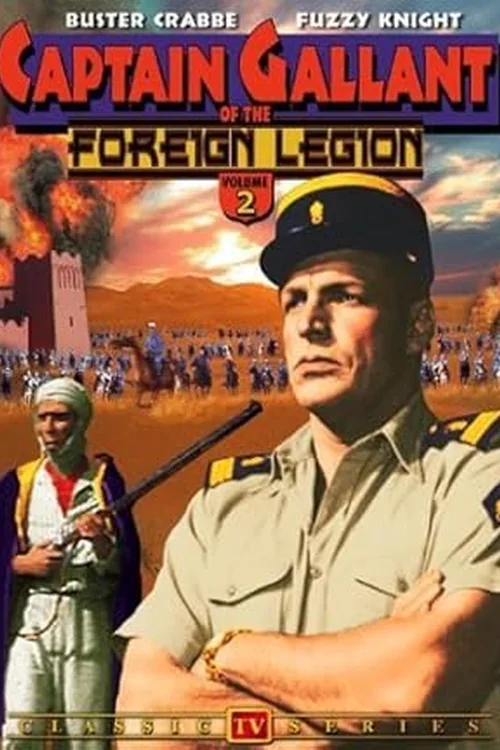
Captain Gallant of the Foreign Legion
Captain Michael Gallant. Adventure series with Cuffy Crabbe and Fuzzy Knight.
Production artwork from the DailyTimeCapsule archive. Image credits
Rewatch notes
- Crabbe won Olympic gold in the 400-metre freestyle in 1932.
- He played both Flash Gordon and Buck Rogers in film serials.
- His son appeared with him in Captain Gallant of the Foreign Legion.
Career highlights
Poster for chapter twelve of Crabbe's serial.
The 1936 serial, not the 1980 feature.
Adventure series with Cuffy Crabbe and Fuzzy Knight.
Sources and image credits
Portrait: Paramount Pictures; photographer unidentified
https://commons.wikimedia.org/wiki/File:Buster_Crabbe_in_Search_for_Beauty.jpg
License: Public domain (US) https://commons.wikimedia.org/wiki/Template:PD-US-no_notice
- Tarzan the Fearless — Principal Distributing Corporation. Public domain (US, no copyright notice). https://commons.wikimedia.org/wiki/Template:PD-US-no_notice
https://commons.wikimedia.org/wiki/File:Poster_-_Tarzan_the_Fearless_01.jpg - Flash Gordon — Universal. Public domain (US, copyright not renewed). https://commons.wikimedia.org/wiki/Template:PD-US-not_renewed
https://commons.wikimedia.org/wiki/File:Flash_Gordon_(serial).jpg - Captain Gallant of the Foreign Legion — Production artwork from the DailyTimeCapsule archive.
https://en.wikipedia.org/wiki/Captain_Gallant_of_the_Foreign_Legion
Reviewed September 23, 2026. Source references and image credits are listed below. This is a selected profile, not a complete credit list.
- International Swimming Hall of Fame: Clarence Buster Crabbe
https://ishof.org/honoree/honoree-clarence-buster-crabbe/ - Olympedia: Buster Crabbe
https://www.olympedia.org/athletes/51303 - Library of Congress: Flash Gordon essay
https://loc.gov/static/programs/national-film-preservation-board/documents/flash_gordon.pdf - UCLA Film and Television Archive: Flash Gordon
https://www.library.ucla.edu/visit/events-exhibitions/flash-gordon-11-19-23/ - TCM: Tarzan the Fearless
https://www.tcm.com/articles/387205/tarzan-the-fearless - Captain Gallant production history
https://en.wikipedia.org/wiki/Captain_Gallant_of_the_Foreign_Legion - Buster Crabbe biography and credits
https://en.wikipedia.org/wiki/Buster_Crabbe - Search for Beauty portrait provenance
https://commons.wikimedia.org/wiki/File:Buster_Crabbe_in_Search_for_Beauty.jpg - Flash Gordon poster provenance
https://commons.wikimedia.org/wiki/File:Flash_Gordon_(serial).jpg - Tarzan the Fearless poster provenance
https://commons.wikimedia.org/wiki/File:Poster_-_Tarzan_the_Fearless_01.jpg
Production artwork is reused from the DailyTimeCapsule archive. The imagery represents the production and may not depict this actor or their particular season. Portrait and share-photo attribution appears beneath the portrait.
Corrections: hello@dailytimecapsule.com