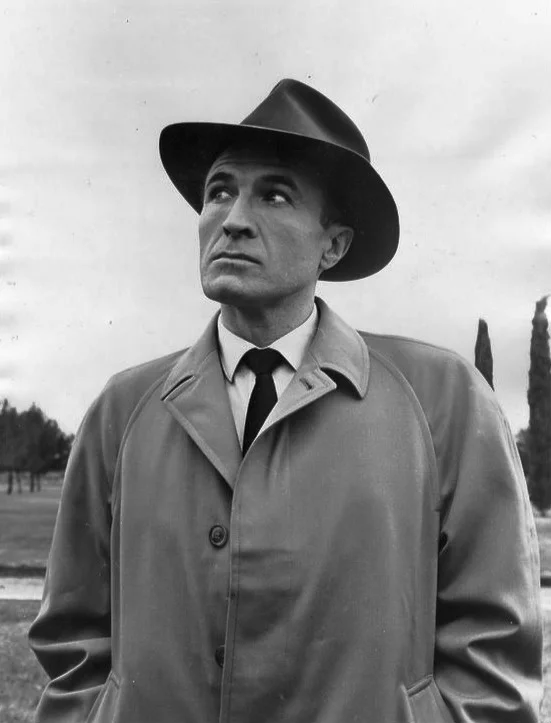
Barry Morse in The Fugitive (1964 release)
Lieutenant Philip Gerard
WBKB-TV publicity record refers to a September 15, 1964 broadcast; exposure date is not printed.
Entry point: The Fugitive (1963).
Explore the career in pictures
Updated
Barry Morse brought a substantial theatre and radio career to the television roles that made his face familiar internationally. In The Fugitive he was Lieutenant Philip Gerard, pursuing David Janssen's Richard Kimble; in Space: 1999 he played Professor Victor Bergman alongside Martin Landau and Barbara Bain. The contrast is a useful entry into his work. One character creates pressure through pursuit, while the other helps colleagues confront uncertainty. Morse's performances also belonged to a working life that crossed Britain, Canada and the United States, with stage acting, directing and storytelling continuing alongside television.
Born in London in 1918, Morse won a scholarship to the Royal Academy of Dramatic Art and entered repertory theatre. His official biography records early BBC television work from 1937, a West End appearance in School for Slavery, and film work in The Goose Steps Out. He married fellow actor Sydney Sturgess in 1939; they moved to Canada in 1951. There he worked in theatre and broadcasting, including the CBC radio series A Touch of Greasepaint. The history of actors became material for his own performances as well as a professional inheritance.
In his 1995 Dreamwatch interview, Morse recalled producer Quinn Martin offering him The Fugitive. He initially wondered why he had been considered for so distinctly American a police officer. The result was a role whose conviction matters as much as its persistence: Gerard must believe in the pursuit even when the audience is aligned with Kimble. Morse also remembered an affectionate relationship with Janssen, despite sharing fewer scenes than viewers might expect. The structure often kept the pursuer and the pursued apart. Their connection could shape an episode even while they occupied different places.
For Space: 1999, Morse described constructing a private history for Bergman because the early scripts provided little background. In his Starlog interview, he imagined the professor as a former refugee child. That was preparation for the performance, not an established fact in the televised story. Morse particularly valued the human conversation with Landau in Black Sun, when their characters consider an apparently imminent end. His account offers a way to watch the episode: follow the relationship between the men, the pauses and the acceptance of uncertainty, as well as the spectacular situation around them.
Morse's Dreamwatch recollections also cover The Zoo Gang, in which he worked with John Mills, Lilli Palmer and Brian Keith. He remembered the company and their location work in Nice warmly. These ensemble relationships offer a different professional setting from Gerard's solitary pursuit. A career comparison can move between The Fugitive, The Zoo Gang and Space: 1999 without assuming that the authority Morse conveys always serves the same purpose. Sometimes a character obstructs another person's plans; sometimes he shares the problem. Listening to whom he addresses and what he wants from them helps separate those functions.
Theatre remained central to Morse's career. His official record includes Broadway acting in Hadrian VII and directing Staircase, alongside a long association with George Bernard Shaw. The Shaw Festival's artistic-director record places his leadership in 1966. His one-man show Merely Players drew on the lives and stories of performers, bringing theatrical history into direct contact with an audience. These credits broaden a television-led introduction: Morse was not simply moving from one recurring screen character to another. He also interpreted plays, directed other actors and used the spoken story as a performance in its own right.
The gallery combines a Fugitive publicity photograph associated with a 1964 station release and two later portraits. One is dated May 2007; the Anthony Wynn photograph has a recorded upload date, but its exposure date is not established here. That distinction avoids turning archive metadata into a false career milestone. Morse died in London in 2008. For a concise return to his work, pair Gerard's pursuit with Bergman's conversation in Black Sun, then explore the theatre credits. The same actor can suggest dogged certainty, practical curiosity and companionship without making those characters interchangeable.
A television publicity image and two later portraits connect Barry Morse’s screen identity with the actor himself. Archive dates are distinguished from confirmed photograph dates.
Lieutenant Philip Gerard
WBKB-TV publicity record refers to a September 15, 1964 broadcast; exposure date is not printed.
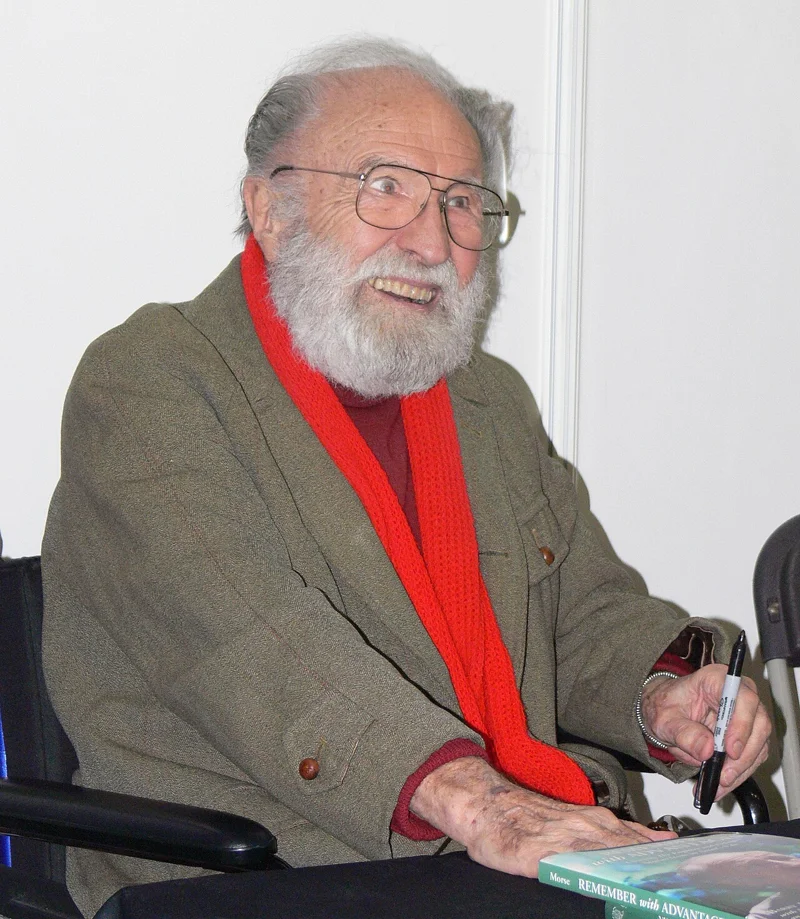
Later-career portrait
Tim Drury photograph dated May 26, 2007; source was cropped before Commons upload.
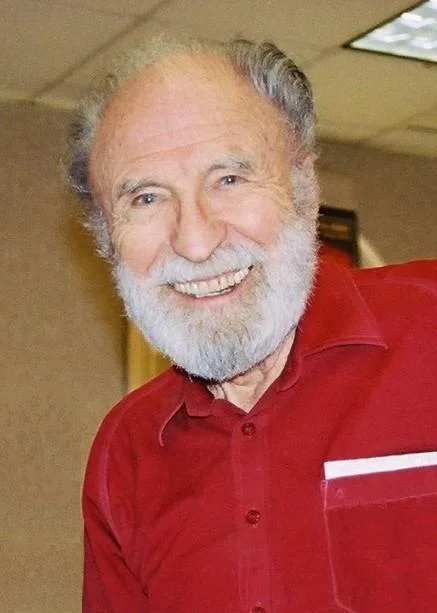
Photographed by Anthony Wynn
The archive records an August 2007 upload, not a verified photograph date.
Barry Morse: official career biography
https://barrymorse.com/
Starlog: Barry Morse interview, December 1995
https://catacombs.space1999.net/press/starlog/wrefpmorse.html
Dreamwatch: Morse’s Code, December 1995
https://catacombs.space1999.net/press/dw/wrefibm95.html
Shaw Festival: artistic directors record
https://company.shawfest.com/sites/default/files/productionrecord_artistic_directors_1963_-_present.pdf
Commons: portrait provenance and license
https://commons.wikimedia.org/wiki/File:Barry%20Morse%20Girard%20The%20Fugitive%201964.JPG
Corrections: hello@dailytimecapsule.com
Work: Barry Morse Girard The Fugitive 1964.JPG
Creator: WBKB-TV, which was the owned and operated ABC television station in Chicago. Some years later, the station changed its call letters to WLS-TV .
Date: No date on press release but it does say the show was to premiere 15 September 1964.
Original source: http://www.ebay.com/itm/1964-Original-Press-Photo-Lt-Philip-Gerard-Barry-Morse-TVs-The-Fugitive-/230740764667?pt=LH_DefaultDomain_0&hash=item35b938a7fb#ht_500wt_1413
Primary archive: https://commons.wikimedia.org/wiki/File:Barry%20Morse%20Girard%20The%20Fugitive%201964.JPG
License: Public domain
License URI: https://commons.wikimedia.org/wiki/File:Barry_Morse_Girard_The_Fugitive_1964.JPG
Changes: Resized and converted to WebP; portrait also placed in a titled share image. No endorsement implied.
Rights scope: No endorsement implied. See the stated license and modification notice.
Work: Barry Morse.JPG
Creator: Tim Drury from Cambridge, Cambridgeshire
Date: 2007-05-26 12:57
Original source: https://www.flickr.com/photos/32527990@N00/516019837/
Primary archive: https://commons.wikimedia.org/wiki/File:Barry%20Morse.JPG
License: CC BY-SA 3.0
License URI: http://creativecommons.org/licenses/by-sa/3.0/
Changes: Resized and converted to WebP; portrait also placed in a titled share image. No endorsement implied. These image derivatives remain available under CC BY-SA 3.0.
Rights scope: No endorsement implied. See the stated license and modification notice.
Work: Barry-Morse.jpg
Creator: Anthony Wynn; archive attribution: Starparty at English Wikipedia
Date: 19 August 2007 (original upload date)
Original source: https://en.wikipedia.org
Primary archive: https://commons.wikimedia.org/wiki/File:Barry-Morse.jpg
License: CC BY 2.5
License URI: https://creativecommons.org/licenses/by/2.5
Changes: Resized and converted to WebP; portrait also placed in a titled share image. No endorsement implied.
Rights scope: No endorsement implied. See the stated license and modification notice.